

What else are we carrying?
Last week, I laid out the cameras, lenses and bags I carry. This week, I’m thinking about the things we can’t see.
Having the right gear matters. And there are few photographers who won’t talk enthusiastically – and at length – about lenses and camera bags.
But the less tangible things we’re carrying might shape our photographs far more than any piece of hardware ever could.
Here are six things we all carry, each of which is worth recognising and weighing.
Identity
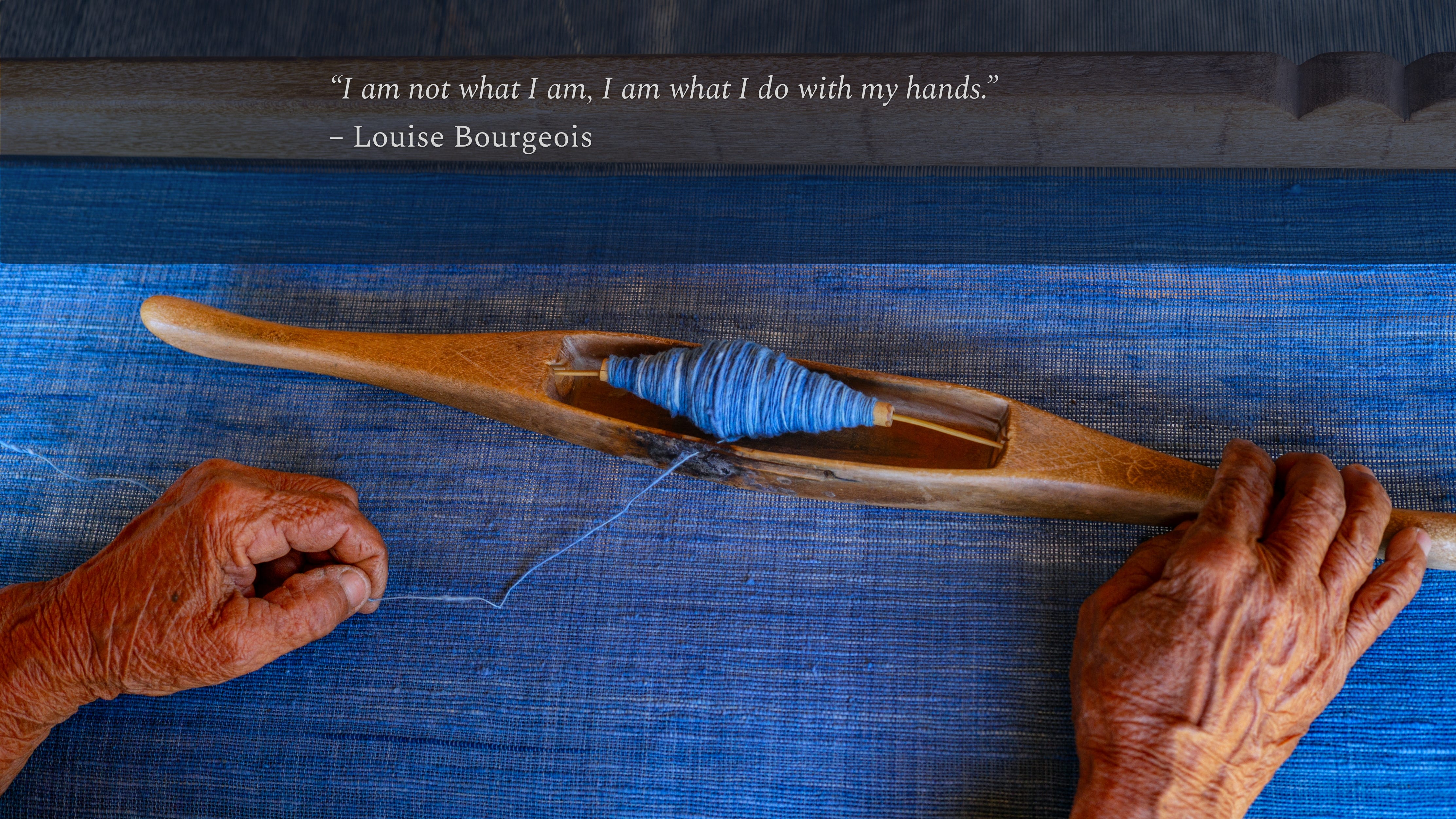
We all carry a sense of who we are, and often a sense of who other people tell us we are. Professionally, we might describe ourselves as a street photographer or a photojournalist, and then conform to the definition we’ve created, and that editors and clients have come to expect.
Having received praise – and occasionally payment – for a certain look or approach, we might be tempted to keep repeating it, seeking more endorsements, wary of stepping off a proven path.
Consistency in our work is a plus. But it can come at the expense of curiosity and experimentation.
It’s worth asking how we’re defining our identity in our work, and whether we’re brave enough, occasionally, to step beyond it. The question is: “I know who I am supposed to be. Who else might I become?”
Expectations
When we set out to make images, we might have a particular scene or event in mind. It’s natural to visualise in advance. We instinctively set expectations about the weather, the quality of the light, how busy it will be… We’re making photos in our mind’s eye long before we arrive.
Expectations can give direction and purpose. We build a mental framework. But they can also narrow our vision, prevent us from responding to the unexpected, because we’re trying to force our expectations onto events which might look very different from what we’d envisaged.
Visualising in advance helps our planning. But nothing stifles creativity faster than inflexible expectations.
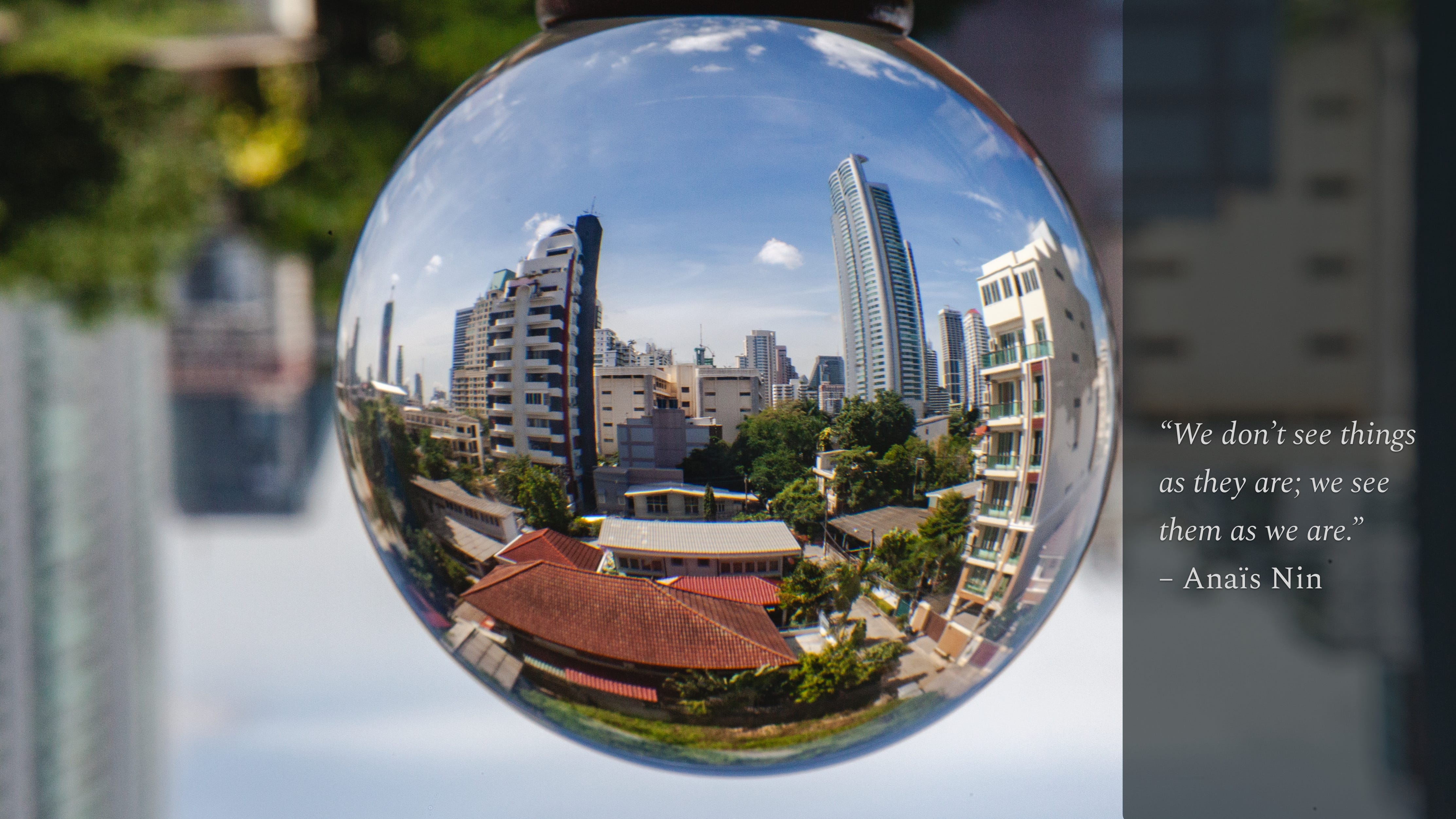
As Anaïs Nin suggested (above), our preconceptions can radically alter the way we perceive the world. A willingness to accept and adapt when our expectations don’t align with the real world makes life smoother – and our creative energies more productive.
Assumptions
Where our expectations attempt to predict the future, our assumptions define what we believe already is.
We apply labels to people and places as a way of managing complexity.
“This street is uninteresting.”
“That person won’t speak with me.”
“There won’t be enough light after sunset.”
If we’re not careful, we can end up photographing our preconceptions instead of what’s actually in front of us.
“That person is shy.”
“This story is tragic.”
The difficulty is that assumptions rarely announce themselves. They feel like facts.
Sometimes the antidote to assumptions is simple: we stay a little longer, ask more questions, invite other opinions, find images where we thought there were none.
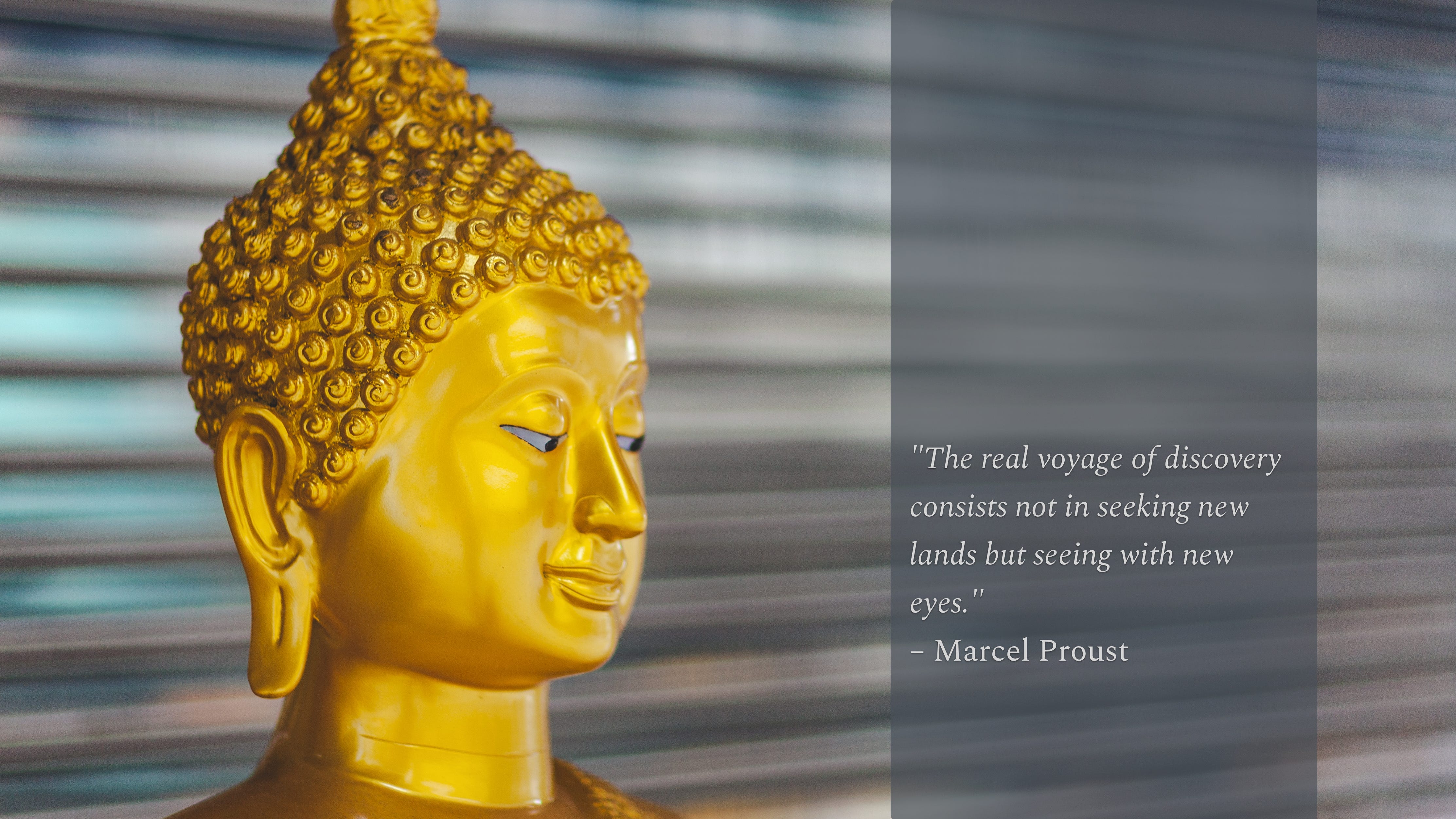
We try, as Proust suggests, to see with new eyes.
Confidence
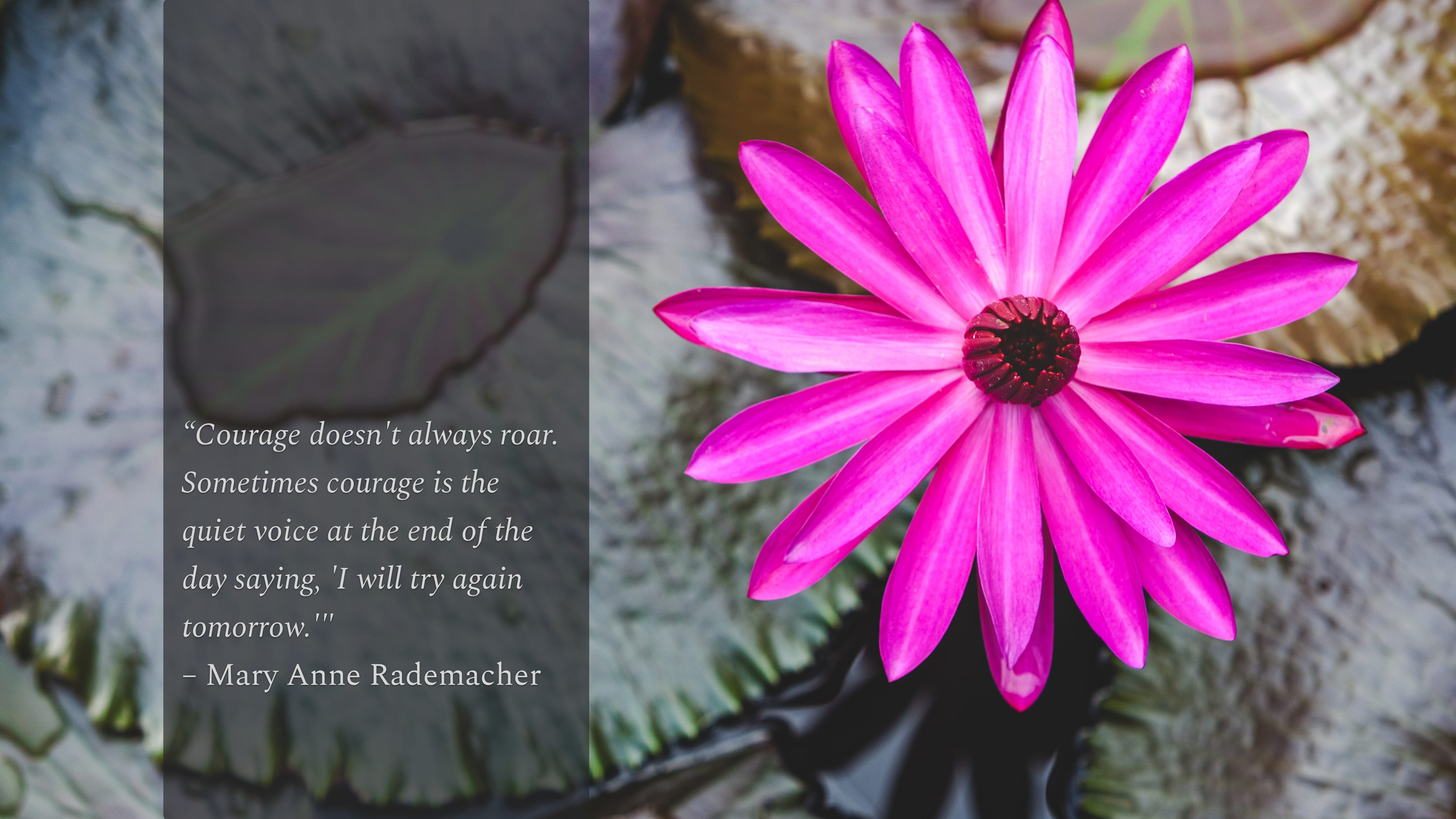
If you think imposter syndrome is an emotional obstacle that only a few people experience, take heart from the words of two of the most successful people in their field.
“Something that is real to all of us: the sharp terror of a loss of confidence in ourselves. No matter who we are, no matter what we’ve done, there comes a point where you think how did I get here? And how am I going to be able to continue this? When are they going to discover that I am, in fact, a fraud and take everything away from me?”
– Tom Hanks
“I have written eleven books, but each time I think, ‘Uh oh, they’re going to find out now. I’ve run a game on everybody and they’re going to find me out.’”
– Maya Angelou
Of all the intangible things we might be carrying, self-doubt can be the most weighty.
In my experience, there’s no simple remedy. The best I can offer is this:
If Tom Hanks and Maya Angelou feel it too, you’re in fine company. Do what they do:
Turn up.
Do the work.
When you’ve finished, the imposter syndrome might still be present. But so too will the work. And that is enough.
Emotions
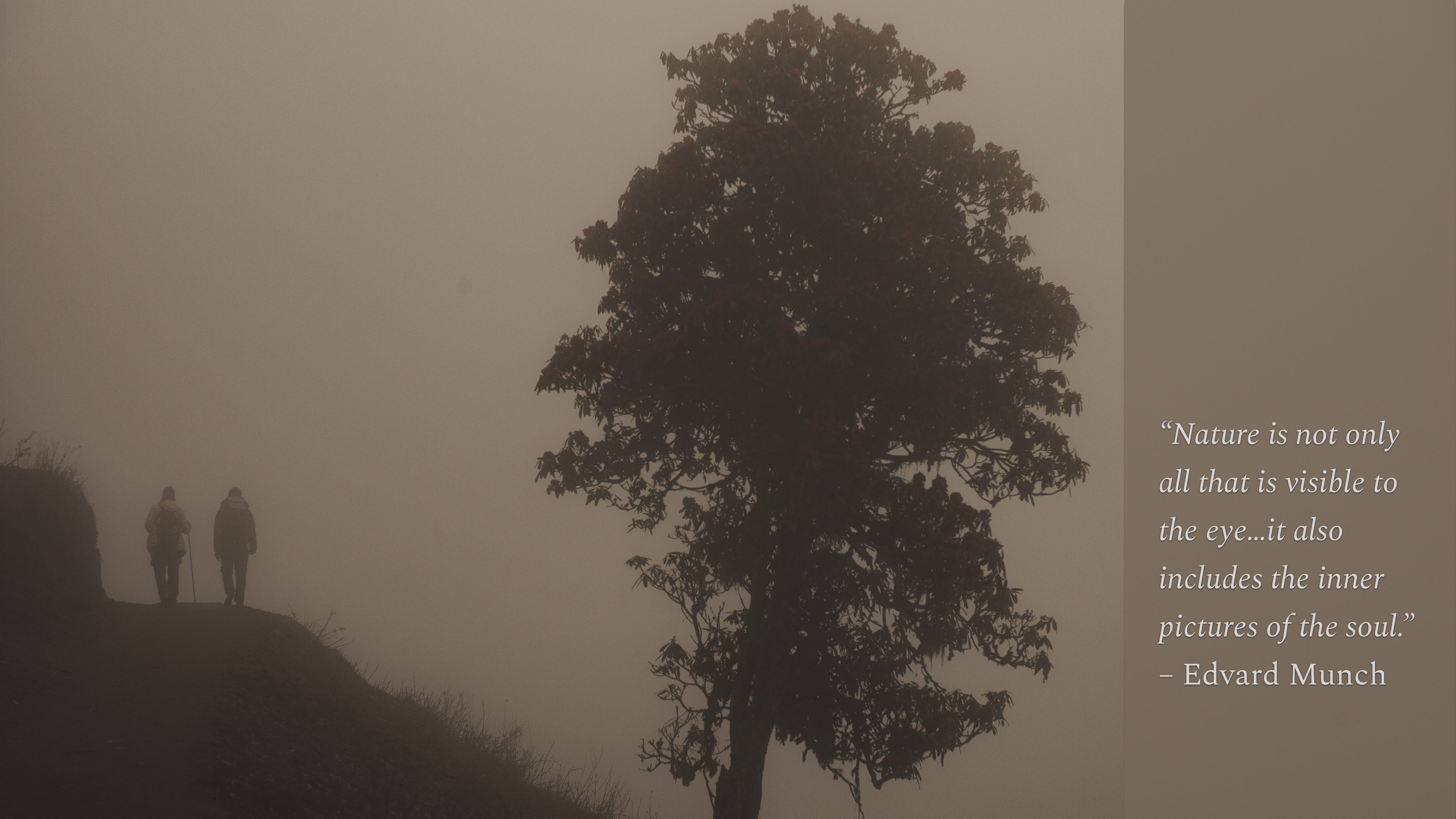
We also carry, wherever we go, our mood.
Tired after a long journey? Irritated by traffic? Rushing because the light is failing? Fumbling with accessories because nothing seems to work properly? Upset because it’s raining or delighted because the sun has come out?
The world is the world. But how we meet it differs from day to day, hour to hour, influenced by our prevailing emotions.
I know that the photographs we make – definitely the photographs I make – reveal not only what was in front of us but also what was inside us.
If there were a potion capable of managing all emotional states, I’m sure we would all buy a bottle. Apparently, there isn’t. What I can offer is a simple reminder that we should take a moment to check our mood as well as our shutter speeds.
We are, after all, the piece of picture-making mechanics with the greatest influence on the results.
Moral Responsibility
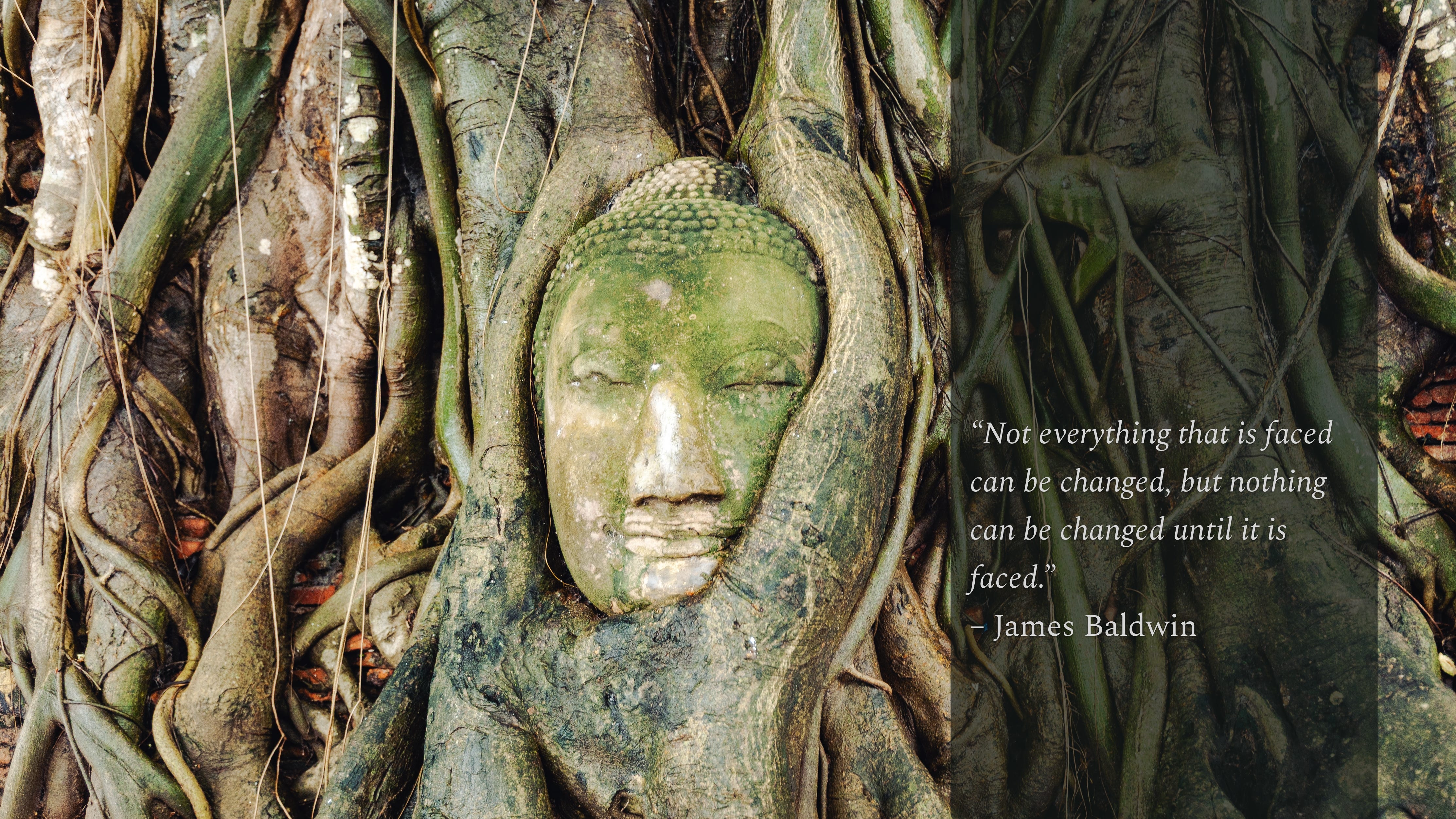
A camera gives us the power to frame stories, to include or exclude, to emphasise or diminish. That power is not neutral. It comes with a degree of responsibility.
It’s not difficult to misrepresent a scene. Thoughtful (or thoughtless) framing, wide-angle or telephoto lenses to alter spatial relationships, timing to make elements appear to coincide… the tools are readily available.
Photography is inescapably subjective and good intentions alone are not always enough. Authentic storytelling requires awareness of context, of consent, and of where power lies.
In particular, the way we represent people should, in my opinion, come from a place of respect and empathy. It is a tremendous privilege to photograph another person.
It’s a privilege I have enjoyed countless times and it always leaves me feeling humbled. We ask a lot when we point a camera at a person, especially strangers. There has to be an exchange, a balancing. Even if it’s only a smile and a nod of appreciation, without some acknowledgment of what’s been given, we will only ever be taking and remain forever in deficit.
“When I approach people, I do it with respect, with deference; I do it slowly and gently and I think about the way I move, the way I speak and the way I use the camera. I let them know that I respect them and what they’re going through.”
– James Nachtwey
“If you take a picture of a human that does not make him noble, there is no reason to take this picture. That is my way of seeing things.”
– Sebastião Salgado
Every photograph makes a claim about how the world looks. Our responsibility is to ensure our claims are made with care and compassion.
What we carry
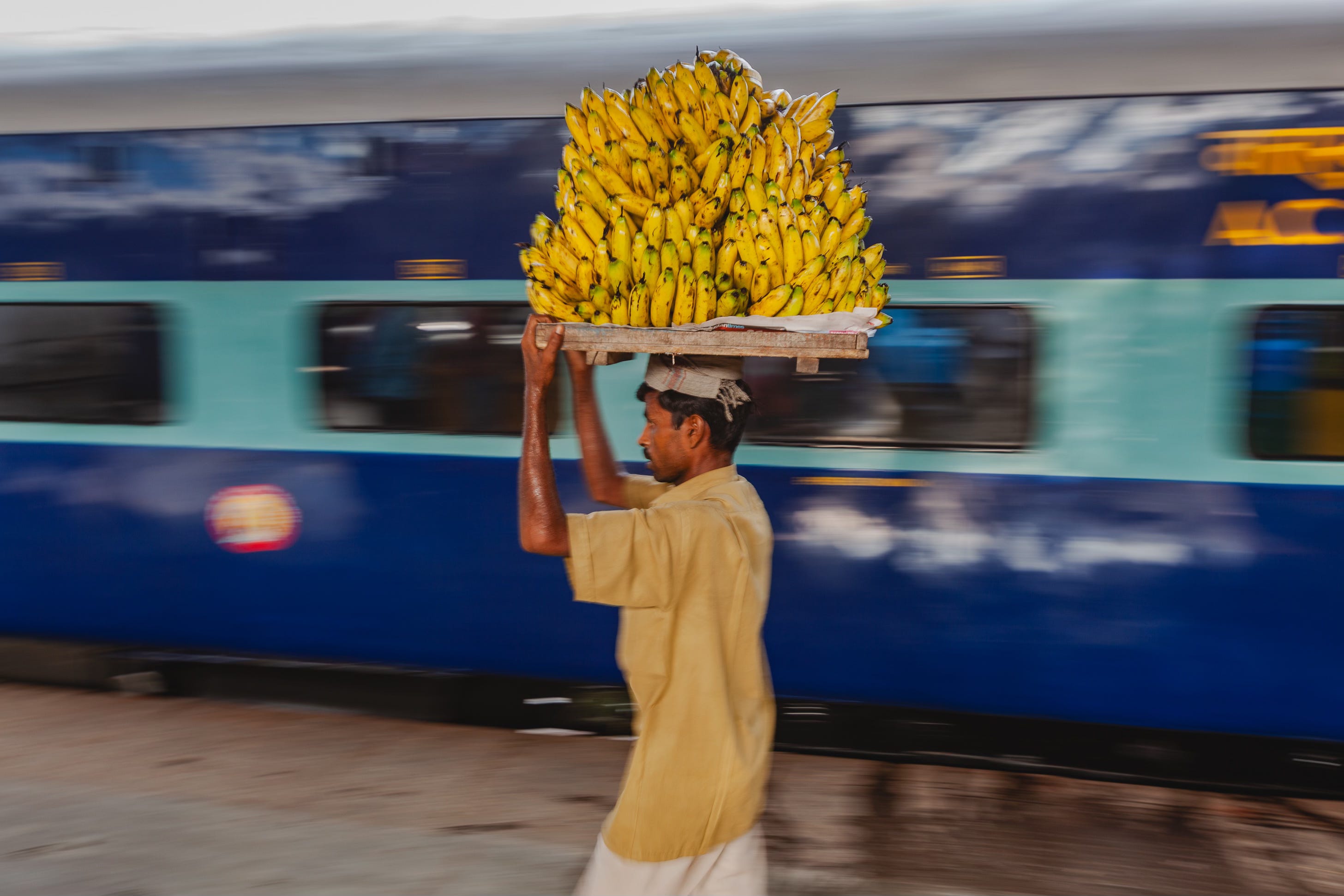
We spend a lot of time thinking about what gear we carry. We analyse the weight, measure the sharpness of our lenses, test the reliability of the mechanics… But I think the unseen things weigh more. They’re always present. They shape how we see, influence how we engage, and affect the outcome of our photography more than any physical gear.
It’s true that the camera is in our hands. We control the mechanics. But images are taking shape long before the shutter is released – in the mind and in the character of the person holding it.
“The camera is an instrument that teaches people how to see without a camera.”
– Dorothea Lange
Beyond the Frame Recommendations
Articles, documentaries, exhibitions, podcasts and more.
☆ Read – Emotions and creativity

A review in Psychology Today of the recently published Cambridge Handbook of Creativity and Emotions. I haven’t read the book but I did find the article posed some thought-provoking questions.
◉ Listen – Tom Hanks interview

The Tom Hanks quote (above) comes from a 2016 NPR interview. He’s always an excellent interviewee; thoughtful, authentic, straightforward.
❖ See – The Photography & Video Show, UK

Should you be in need of a gear fix, the Photography and Video Show takes place at the NEC in Birmingham, UK next month. Standard tickets are £18.95, professionals free.
✤ Create
A series of creative prompts, inspired by Brian Eno’s Oblique Strategies, and designed with photographers in mind.

Read more about the concept and learn how to use my Oblique Strategies for Photographers.
And finally…
I’ll be honest, I found it much easier to write about gear! There’s no resistance to describing lenses and camera bags. Writing about intangible elements has not been so straightforward. They’re so… intangible.
However, just between us, I’ve found it more rewarding to consider the other, invisible things that we all carry.
One of the best things about writing a newsletter happens when I learn something in the process. That happens more often than not. Trying to shape abstract concepts that you kind of know but have never formulated is a useful exercise. I hope it’s rung some bells.
Until next time, go well.

◼︎ Directory: Archive of Beyond the Frame newsletters.
◼︎ Resources: Recommended books, films, gear, media etc.

Beyond the Frame 86/

This week we’re looking at camera gear. What tools do I trust and why? What would I like to improve? This edition is for all readers who enjoy shiny toys 😁
It feels like this newsletter was written just for me. So much wisdom I needed to hear today. Thank you x