

The Tools I Trust
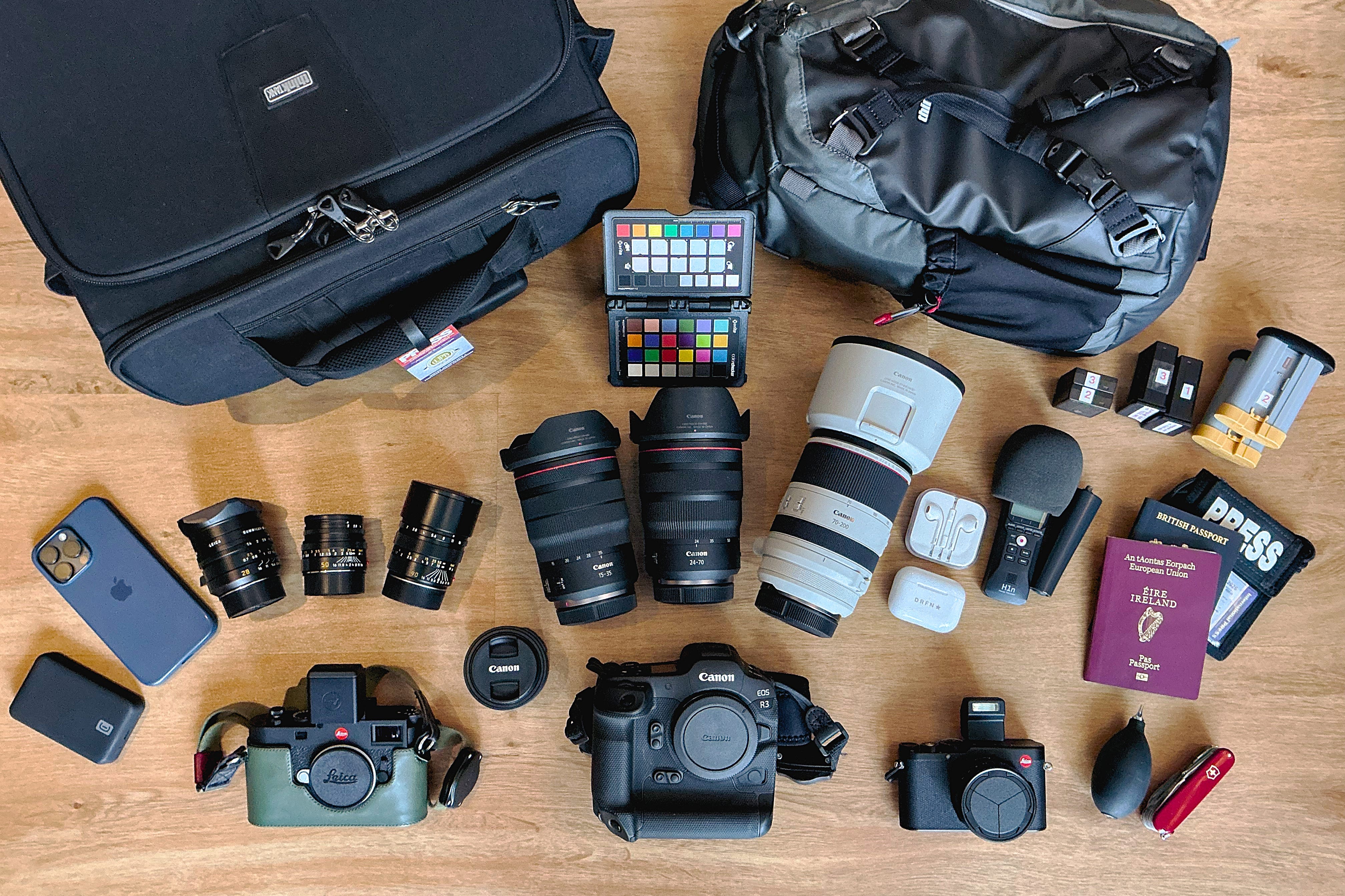
My friends at Shotkit reminded me that it’s been five years since I updated my gear list, hence this review. The photo above shows my current, “essential” gear.
I have similar images showing my gear in 2009 and 2014. Some things have changed but the core components have remained pretty consistent.
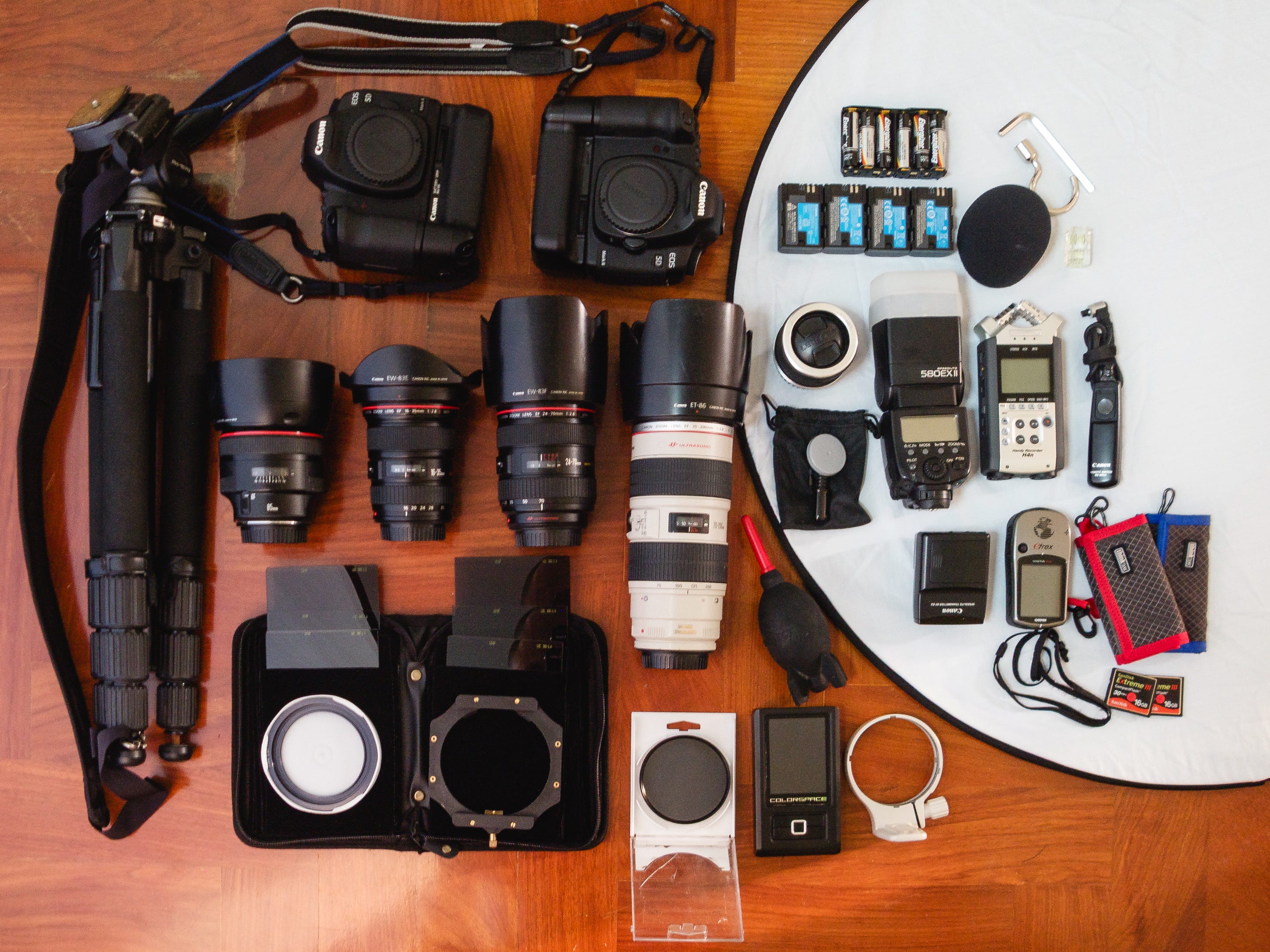
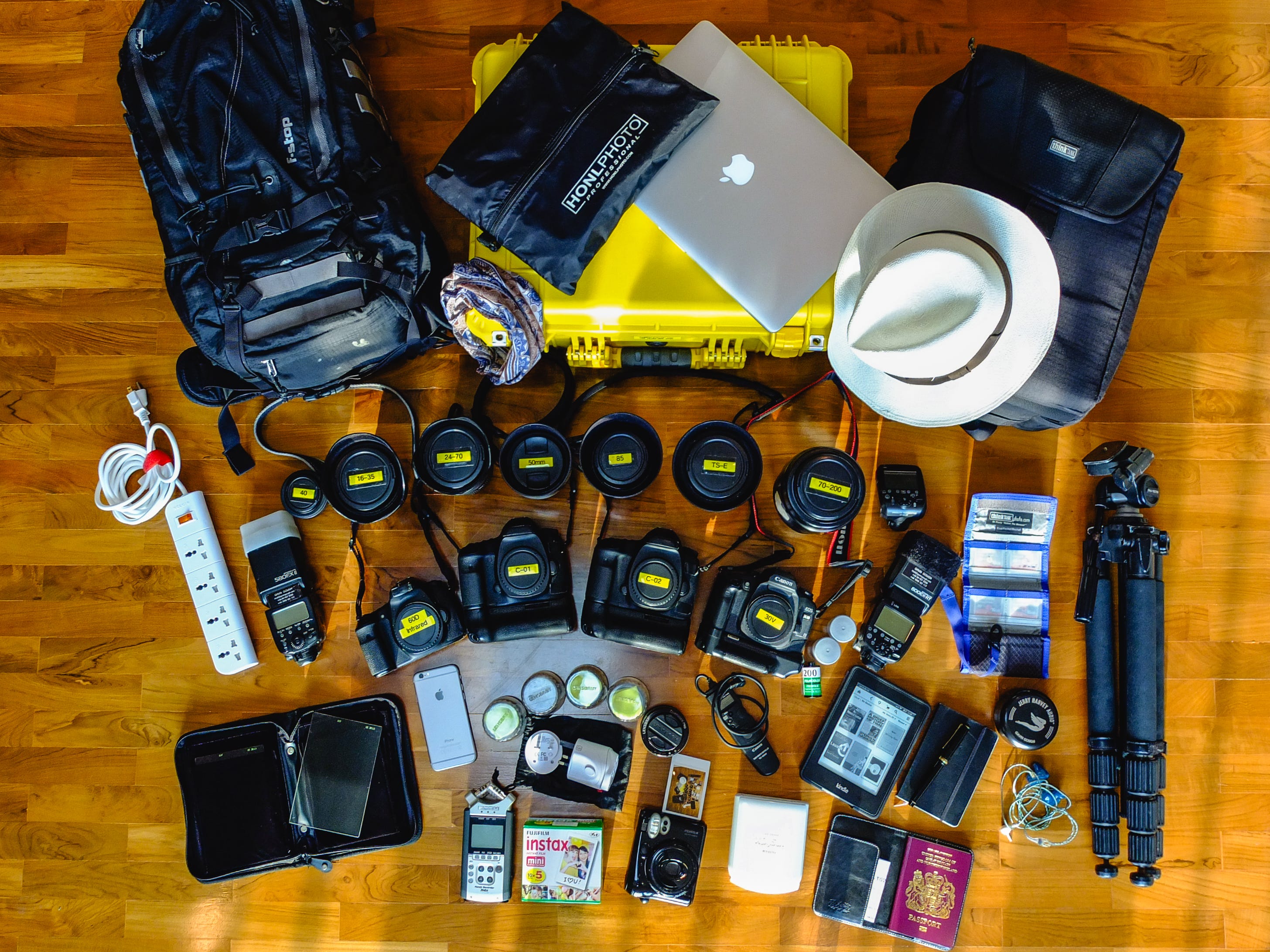
You’ll notice that I’ve reduced the amount of gear I’m using. It’s the result of careful pruning, eliminating anything that can’t genuinely be classified as a must-have.
Accessories have changed, gear has been replaced, but the foundations have stayed the same:
Two main camera bodies
15mm to 200mm focal length range – with various lenses
Wide apertures – ƒ1.2 or ƒ/2.8
I’m reminded that I was still using a dedicated GPS tracker for geotagging images in 2009. These days GPS data is recorded directly in many cameras.
The mobile phone has become invaluable for recording information, voice notes, creating reminders, navigation – and now it’s essential for storing tickets and boarding passes.
However, left to its own devices, the phone can also be a massive pain in the arse. I turn all but the most critical notifications off, otherwise it behaves like a mewling infant, demanding constant attention. I do not have any social media apps installed, valuing what’s left of my brain.
It’s been a 30-year process of fine-tuning, continuing to work with trusted equipment that’s proved to be reliable, eliminating gear that proves to be superfluous or – the worst sin – has failed at a critical moment.
The 2026 Essential List
Canon R3 mirrorless + 3 lenses
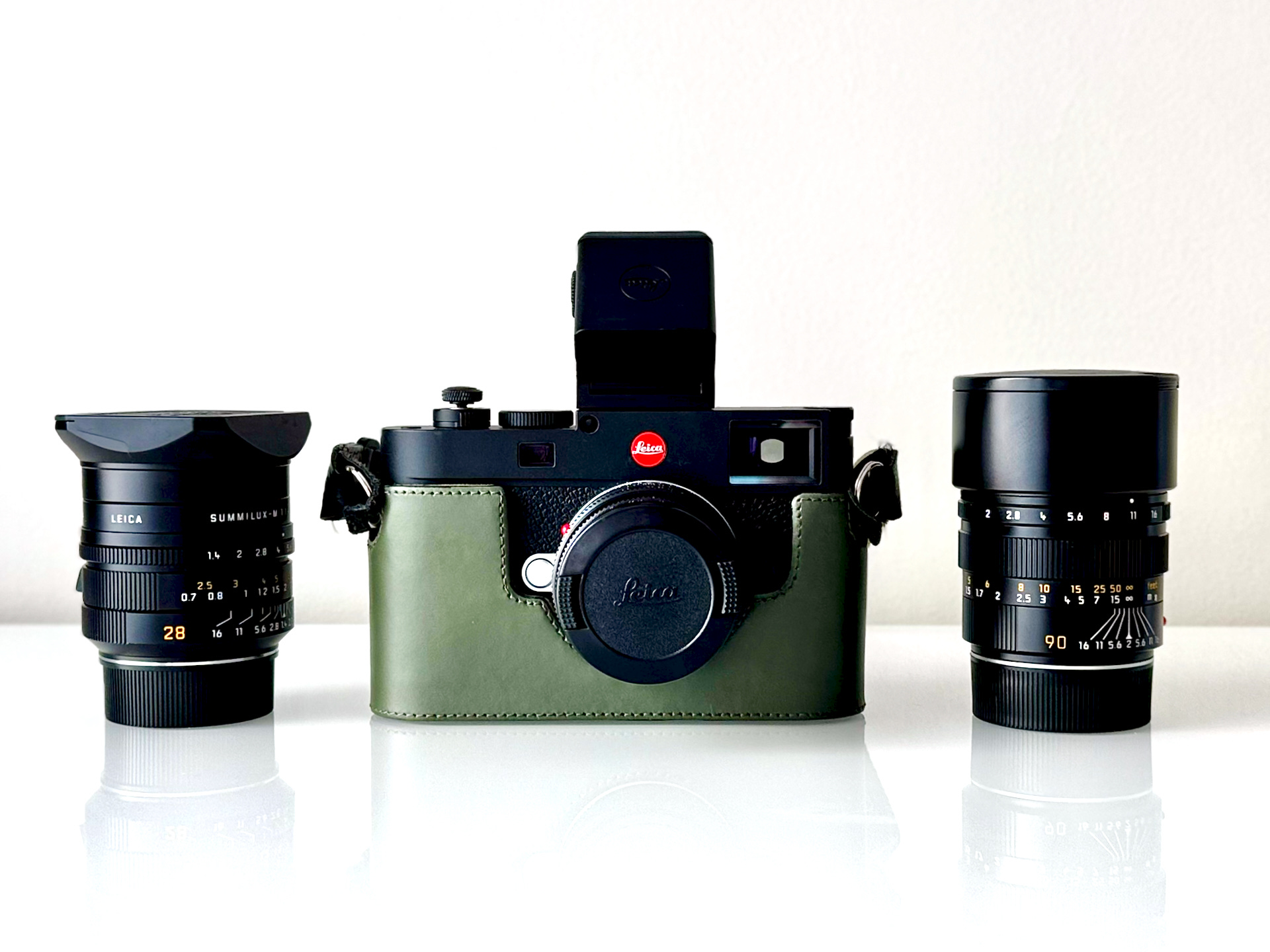
Leica M rangefinder + 3 lenses
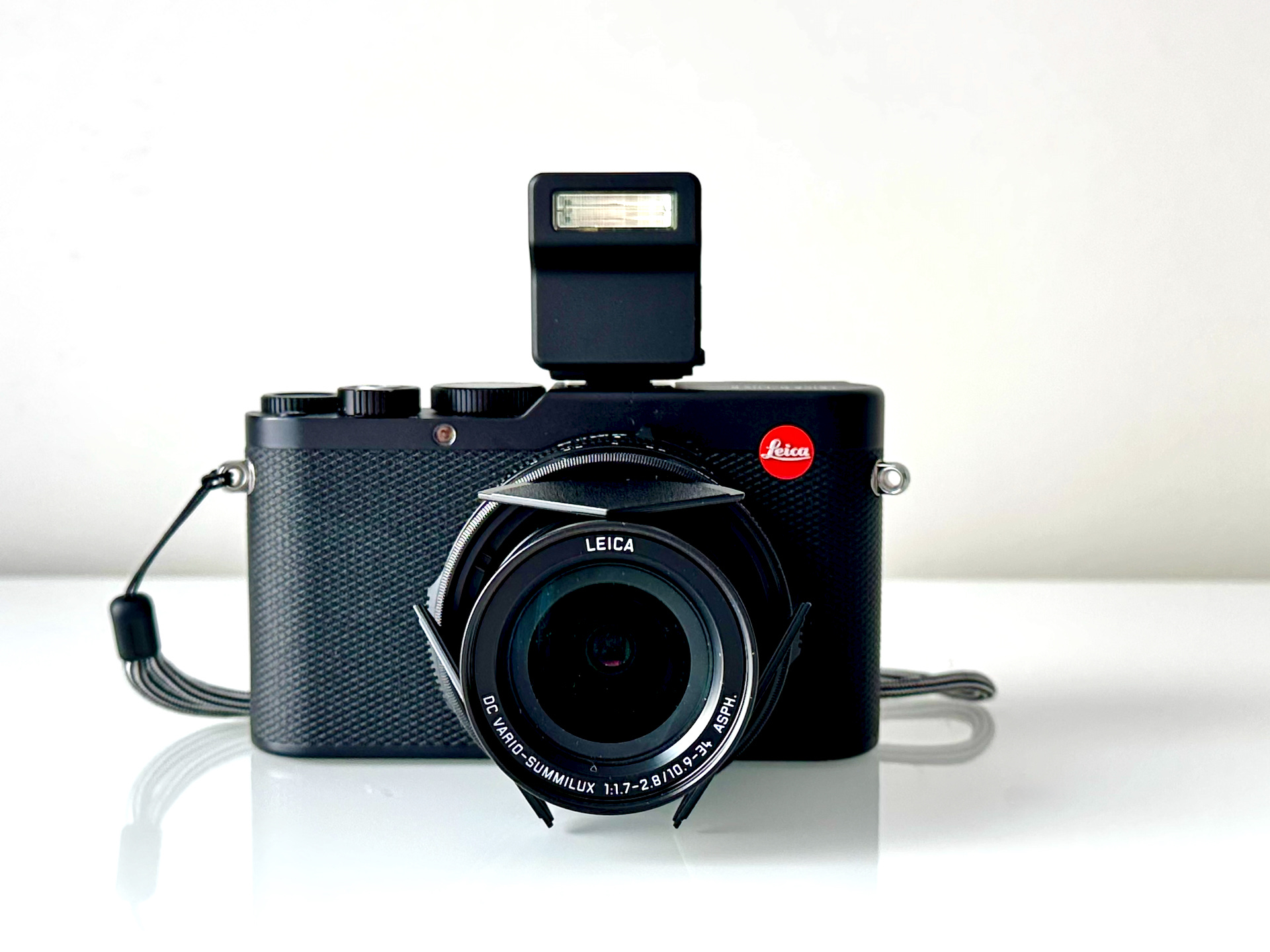
Leica D-Lux 8 compact
Accessories
Full disclosure
I’m not sponsored by any camera, accessory or bag manufacturers. This is a review of gear that I use because it works for me. I’ve included affiliate links to relevant B&H Photo product pages below.
All of this equipment has been used over an extended period. I was going to say “used and abused” but, actually, I take very good care of my camera gear (and get better resale value as a result!)
Speaking of trading camera gear, I’m pleased to announce that MPB have joined Beyond the Frame as a sponsorship partner. I’ll explain how MPB works in a future edition but if you’re buying or selling camera gear, or even if you just want to check the resale value of your cameras and lenses, I’d recommend seeing what MPB has to offer.
Canon EOS R3 Mirrorless Kit
Why I trust it
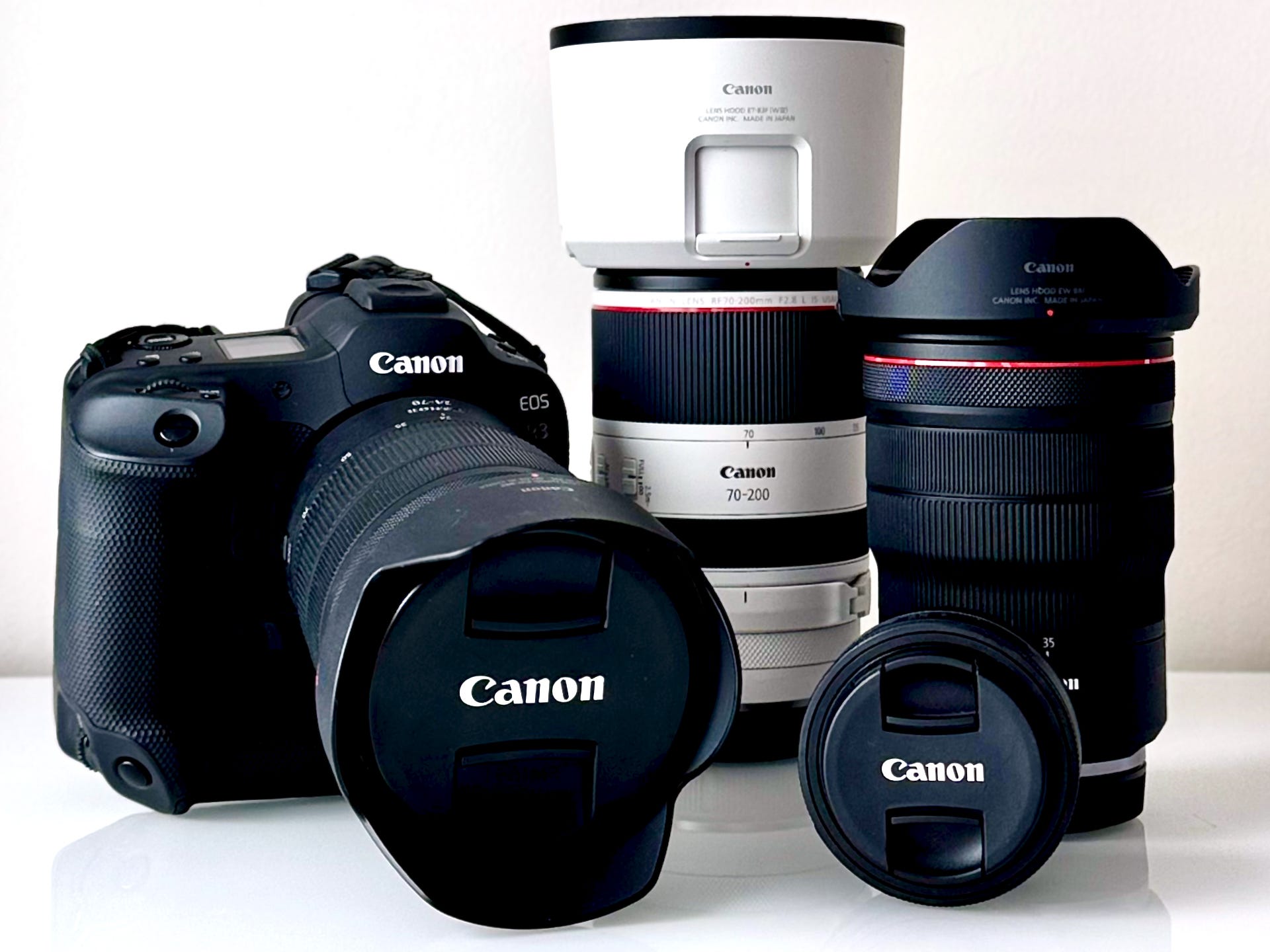
The Canon EOS R3 is my workhorse camera. I’ve used EOS cameras for 30+ years. They are rugged and reliable. I don’t remember an occasion when one has let me down.
I use the traditional trio of 15–35mm, 24–70mm, and 70–200mm lenses. All ƒ/2.8 through the range. I also have a 28mm ‘pancake’ lens as a very lightweight option.
At this end of the EOS range, Canon cameras are chunky, vertical grips are part of the body, buttons and dials are duplicated, so they fall in the same position beneath fingers whether the camera is held horizontally or vertically.
It’s professional kit for professional jobs and this is what I take on commercial assignments.
What I would improve
The R3 reintroduced Canon’s eye-controlled focus, a system I really liked in the old film EOS 5. But, much as I persist with it and assume that when it fails it’s probably my fault, it’s fiddly as all buggery – as granny would have said. The focus point follows your eye when you look through the viewfinder. That’s great in principle but when it flicks from one side of the frame to the other unexpectedly… let’s just say that’s sub-optimal. So, regrettably, I’ve turned it off. I don’t know if that’s a manufacturing or software glitch or just that it doesn’t suit my eyes – it’s probably the latter. If it worked consistently, I’d be delighted.
Another modern problem: after so many technical advances, the menu options on many cameras have become bewildering. To be fair, Canon menus are better organised than some I’ve used, which can be a dog’s dinner (Hello Sony, I’m looking at you), but there are just so many menus to scroll through that remembering where one particular setting can be found is a challenge.
I don’t know what can be done about that. Ideally, I’d like to remove 70% of the functions, which I’ll never use – but, inexplicably, Canon don’t make their cameras for me alone and they have to work for every potential use.
Nevertheless, Canon EOS cameras have been my first choice for commercial work for decades and I don’t expect that to change.
Leica M Rangefinder Kit
Why I trust it
I know Leica gear is expensive and you’ll often find people comparing Leica cameras and lenses to cheaper models and asking whether the expense can be justified. For me, a Leica rangefinder does something few other cameras do: it gets out of the way.
Yes, Leica cameras are precision tools and the image quality from Leica lenses is second to none. You’d be right to expect exceptional quality for the cost of Leica gear.
But more importantly for me, a Leica rangefinder maintains the essential controls of photography with no complications. You won’t find a host of confusing buttons, dials and joysticks on a Leica.
I’m currently using a Leica M11, with these lenses:
Plus, occasionally, a Visoflex 2 viewfinder.
I typically use Aperture Priority mode and this is the process:
Set the aperture. Twisting the aperture ring on the lens is a tactile, physical movement that moves the aperture blades. It feels more like direct control than turning a digital dial.
Frame the image. I sometimes use the Visoflex viewfinder attachment but prefer the traditional, optical, bright-line rangefinder.
Focus. Again, a manual twist of a focussing ring on the lens. Direct and immediate. No autofocus hunting for contrast.
Click the shutter release.
That’s it. The camera doesn’t demand my attention. I can concentrate fully on the subject, wait, anticipate and be more directly engaged with the scene.
What I would improve
The Leica M is not a high-speed sports camera or a long-range, predictive-focussing wildlife camera. It’s a camera built for the street, for reportage, for photojournalism. It’s unobtrusive, quiet and efficient – much like myself.
A Leica does what it’s best at without fuss and so there’s little to improve. It’s a truism that you get what you pay for so whilst the investment is not modest, I’ve never regretted buying Leica gear.
Leica D-Lux 8 Compact Camera
Why I trust it
The compact Leica D-Lux 8 is the camera I carry everywhere. It’s replaced my phone for quick photos because it’s genuinely pocket-sized, has an impressive optical zoom range, and the image quality is excellent for a camera with a Micro Four-Thirds sensor. I can use it in full manual mode, which I prefer. Full control, great image quality, a versatile zoom range, wide maximum apertures – and the tiny flash that accompanies the camera is too cute for words.
What I would improve
If the D-Lux 8 had a flip-out LCD screen, the camera would be perfect in many ways. It’s the one thing about the camera that I most hope to see added to future models.
Supplementary Gear
Audio
Zoom H1 2-Track 32-Bit Float Portable Audio Recorder For interviews and ambient audio recordings
Wired headphones For monitoring sound levels
AirPods Pro + AirPods Max (not pictured)
Accessories
Air-Blower – to remove dust from lenses
Calibrite ColorChecker Passport Photo 2 for accurate colour reproduction and white balance.
Swiss Army knife – I’ve always carried one but now, as a Swiss resident, it would be rude not to.
Spare batteries and chargers
iPhone and MagSafe battery pack
Passports and Press ID
Bags
The perfect camera bag is the Holy Grail for photographers. Ideally, it should be the perfect size to accommodate your gear, bring specific lenses and accessories to the top of the bag as you need them (some magic required), be entirely weightless and virtually invisible.
I’m still searching.
Until I discover the Nirvana Camera Bag, I’ll continue to use the bags that come closest.
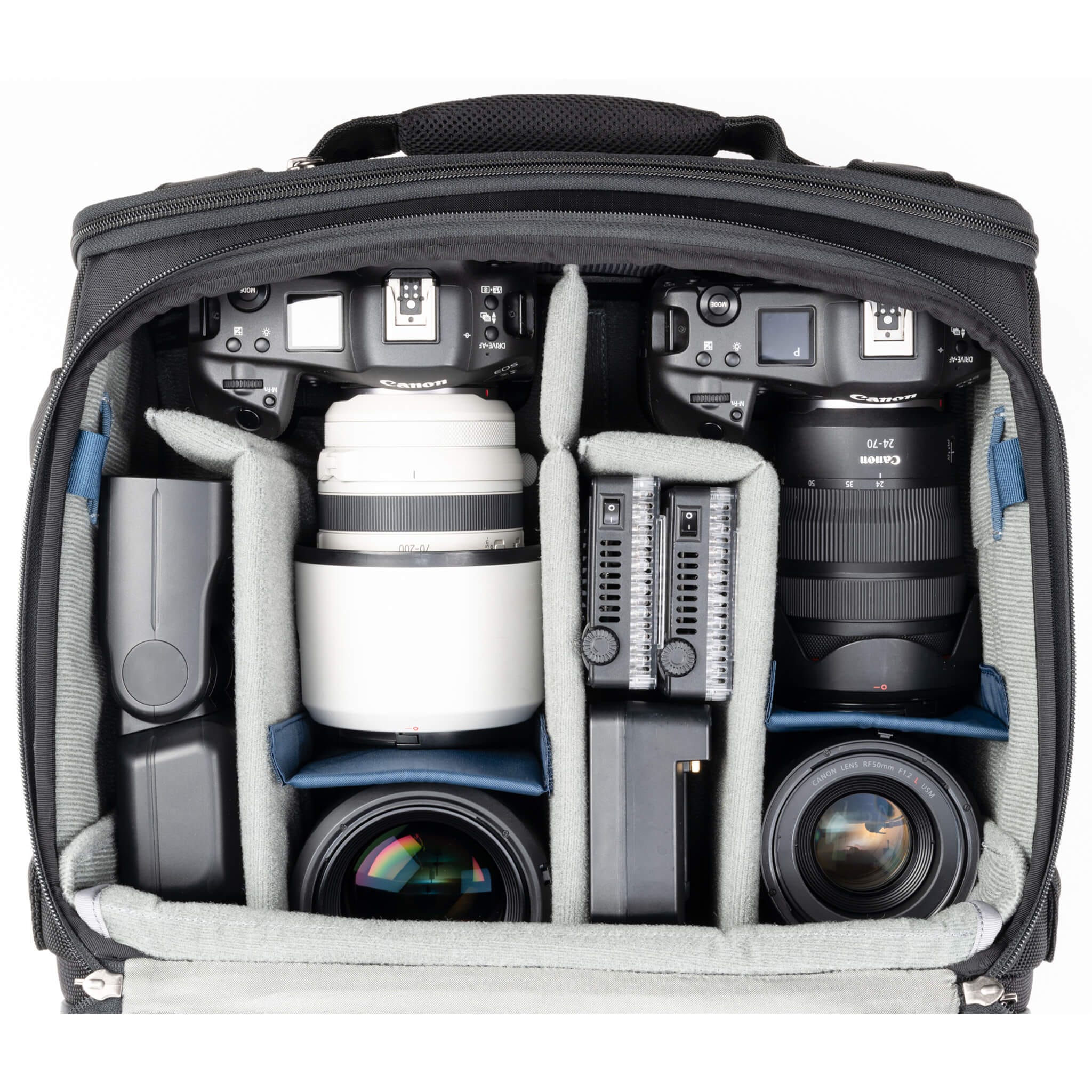
Think Tank Airport Navigator
Think Tank Airport Navigator – I’ve had this carry-on airline bag for many years. It has an uncanny ability to accommodate more gear than looks possible from the outside. It’s a TARDIS.
The best feature: A top opening that allows me to pull a camera directly from the bag, lens attached, and start work without needing to unpack
PhotoCross 13
PhotoCross 13 sling bag – A relatively recent addition, I’m a big fan of this bag. It’s large enough to accommodate my Canon gear but spreads weight across the back so I’ve never found it to be uncomfortable.
It’s weatherproof – a big plus.
It has luggage/tripod straps and a pocket for a water bottle. Why more camera bags don’t have space for a water bottle is a mystery to me.
It’s possible to swing the bag around in front and it’s cleverly designed to open away from the body, providing easy access to gear and a secure platform for changing lenses.
Tumi Rucksack
Whilst it’s not marketed as a camera bag, I’ve had this Tumi rucksack (backpack) for about eight years and it’s the bee’s knees.
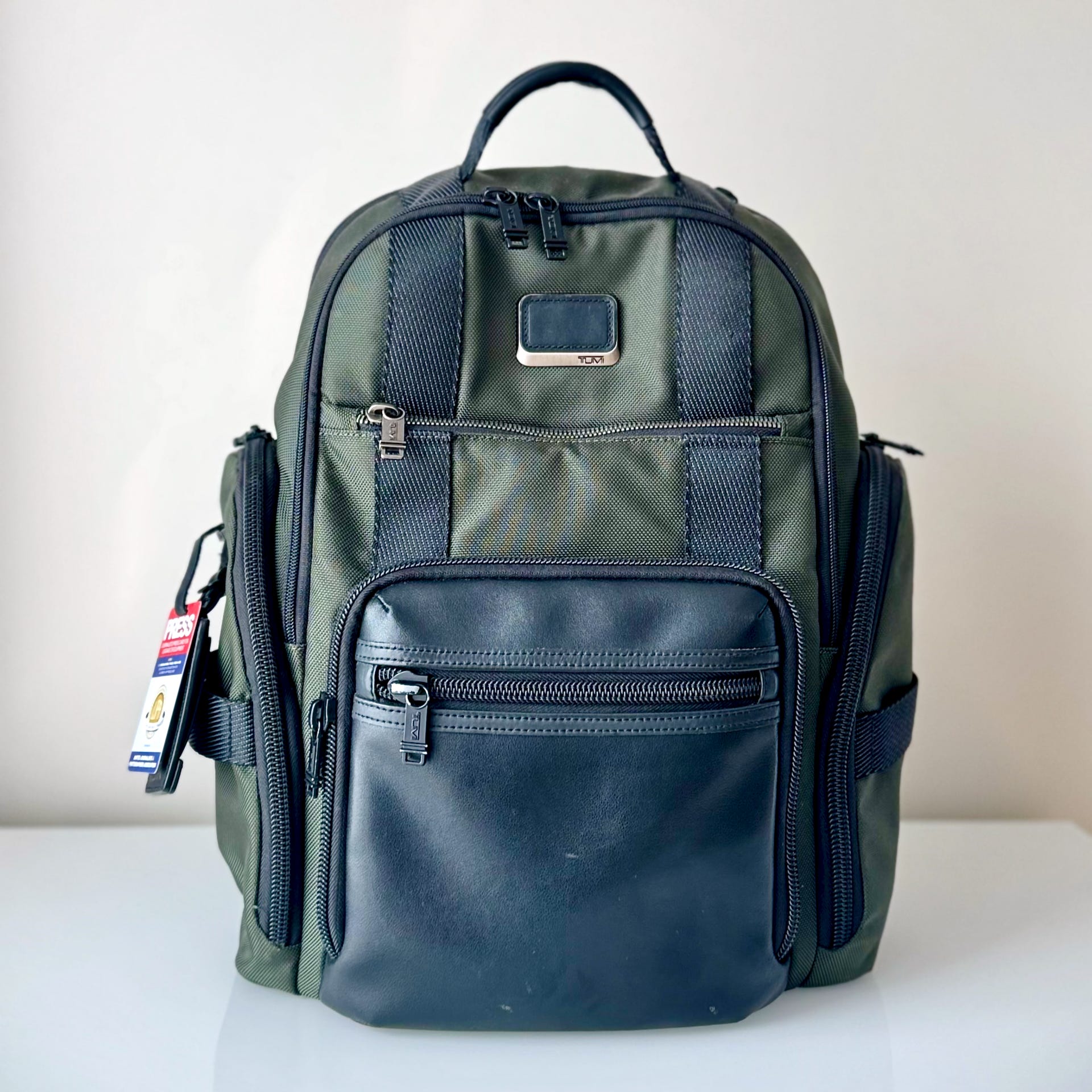
It has a large laptop pocket, just enough space for pretty much all my camera gear – at a push, plenty of extra pockets, including a nifty drop pocket behind the handle, perfect for a phone and passports.
This particular bag appears to be made from some other-worldly material that barely shows any signs of wear. After eight years, most bags would be looking pretty shabby. Not so the Tumi.
Tumi bags are wickedly expensive and I would never have bought one ordinarily. However, Mrs. G. once found Tumi bags at some crazily discounted price and bought this one because, she said, “the green matches your eyes.” I continue to be, in all things, blessed.
A final thought about gear
Ultimately, the value of any photographic equipment doesn’t depend on specifications, brand recognition or hefty price tags, but on how quietly and dependably it helps us make the photographs we want.
The tools I’ve learned to trust are those that don’t demand attention. The best camera gear fades into the background, allowing us to concentrate fully on timing, perspective, composition and light.
Having the right gear matters – of course it does – but only insofar as it allows us to stay present and engaged without interruption.
Our attention is always going to be our most precious resource. Good camera gear leaves our attention where it serves us best – our photography.
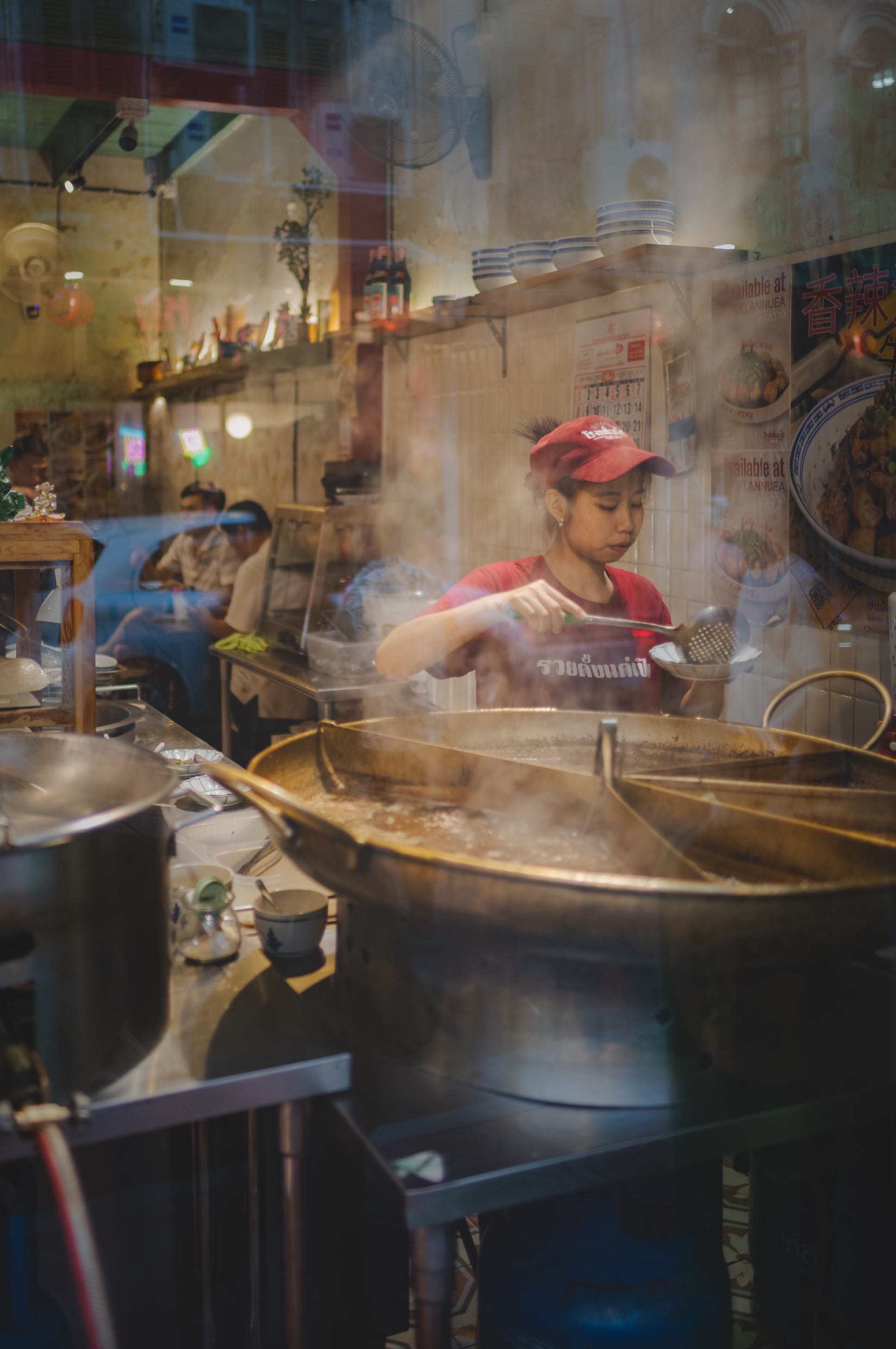
“Your equipment is only a tool. Like any tool sometimes you need specialized gear to accomplish what you’ve either set out to do or for what the assignment requires. What’s important is that you are comfortable with your equipment, that it enables your vision and creativity and ability to respond to the world, instead of getting in the way.”
– Ed Kashi
Beyond the Frame Recommendations
Articles, documentaries, exhibitions, podcasts and more.
☆ Read – Shotkit
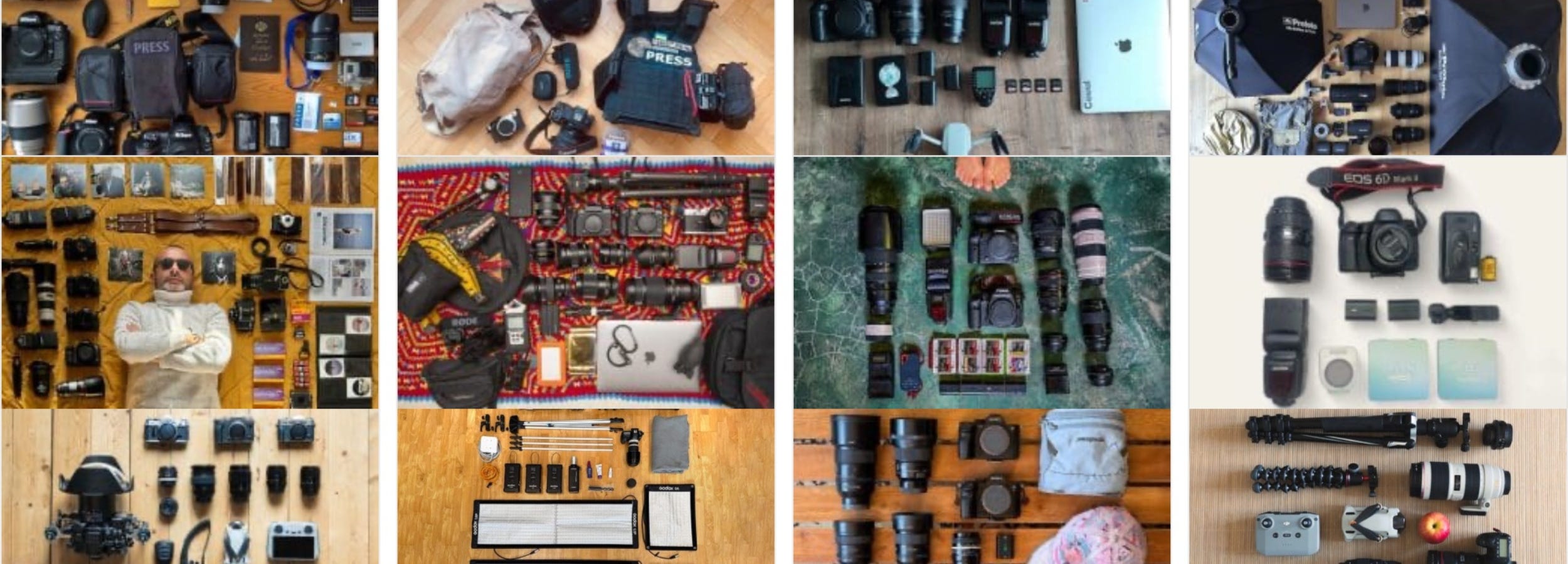
There are more than 1,300 other photographers on the Shotkit website, each sharing photos and descriptions of their gear. The Photojournalism and Travel categories are especially interesting.
⦿ Learn – Three camera-buying tips
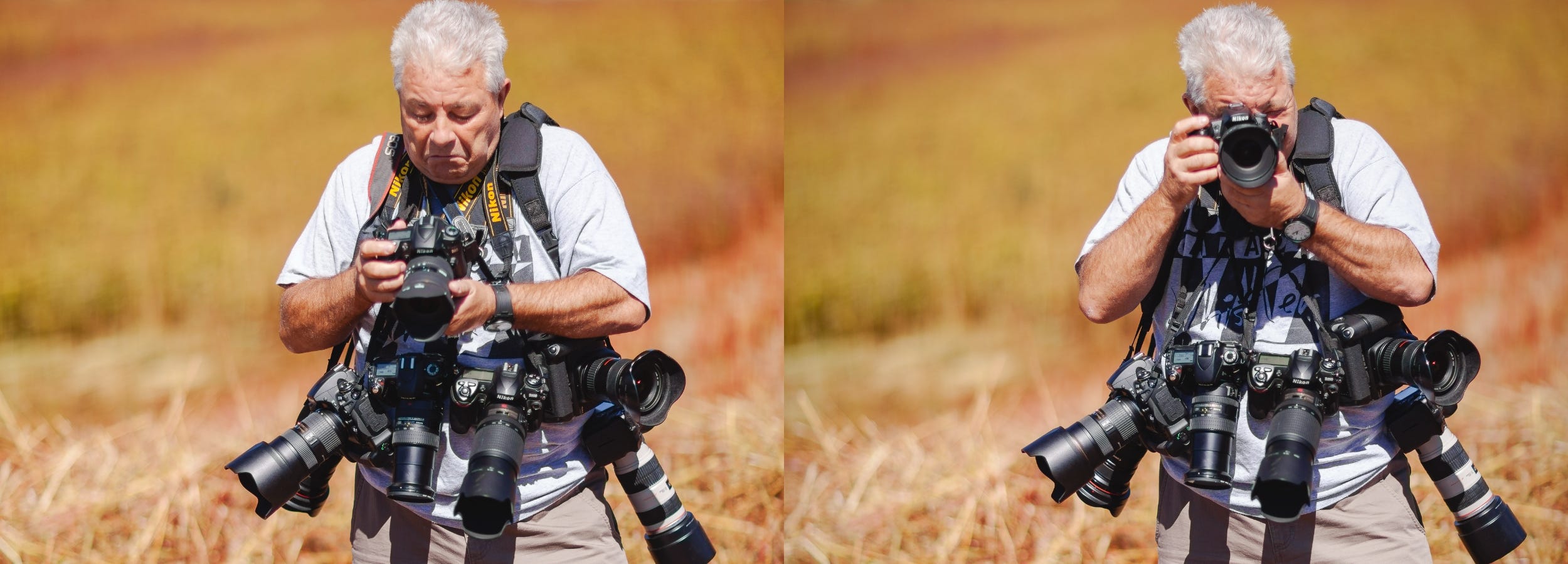
Here’s a reliable, three-point, gear-buying mantra:
Invest in experiences first. Spending money on a trip to a new destination can be more productive than buying more gear. New experiences trigger ideas and build motivation. If existing gear works well enough, use precious resources to go places instead of buying more kit.
Reliability beats brilliance. The best camera gear works reliably every time. Better to have an uncomplicated camera that does exactly what you need, when you need it, than the latest all-singing, all-dancing model with so many options that it’s just confusing.
Fewer options = clearer decisions. I would rather work with one lens than with 20. When we’re not faced with so many choices, we can concentrate on what’s important: the subject and the light.
PS – To spare his blushes, I should point out that my friend Frank does not actually carry this many cameras. During a photo workshop in Bhutan, we loaded Frank up with all the students’ cameras so he could make a group photo – and also because it amused us greatly. Simple things…
▶︎ Watch – Photographer retrieves stolen camera gear
Benj Haisch’s camera gear was stolen but he was able to locate it by tracking an AirTag. His encounter with the thieves turned out well, thankfully.
It’s a reminder that attaching a trackable device to camera gear is simple but potentially effective.
I’d recommend contacting the police if you ever find yourself in a similar situation. Benj’s encounter turned out OK but it could have been very different.
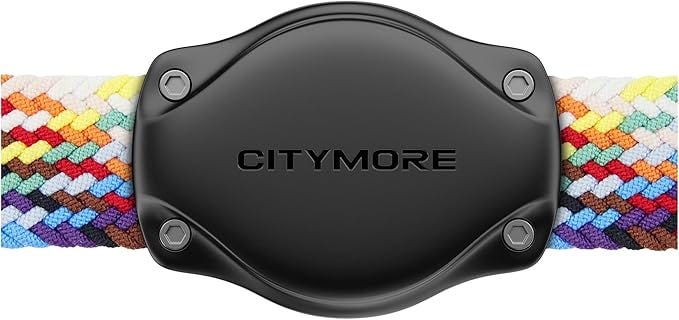
I attach these AirTag holders directly to my camera straps, so the camera is trackable, not just the camera bag.
✤ Create
A series of creative prompts, inspired by Brian Eno’s Oblique Strategies, and designed with photographers in mind.

Read more about the concept and learn how to use my Oblique Strategies for Photographers.
And finally…
Now it’s time to put all that trusted camera gear to good use. Thai elections are coming up at the weekend. Chinese New Year will follow soon after.
I can’t remember which photographer said, when asked, “What’s your favourite photo?”
“The next one!”
Whoever said it before, I’m also saying it again now.
I hope you are looking forward to your next photo.
Until next time, go well.

◼︎ Directory: Archive of Beyond the Frame newsletters.
◼︎ Resources: Recommended books, films, gear, media etc.

Beyond the Frame 85/

Can a camera change how a child sees the world? In teaching photography to children, I discovered the most important lessons weren’t about pictures at all.
This : Invest in experiences first.
This will help understand what gear may be needed for our intentions. Start with the basics and upgrade over time, but having a ton of great gear and not using it is the worse.