

Rupert Court
“You should google ‘Beatles. Rupert.’”
When a middle-aged man approaches you in London’s Soho district and invites you to start googling, it doesn’t always bode well, in my experience.
“When I see somebody using a proper camera – that’s a professional camera, isn’t it? – I always tell them to google ‘Beatles. Rupert.’”
Smartly dressed in a light summer jacket with a neat, striped tie, the gentleman – for he was clearly nothing less – smiled broadly and pointed into the alleyway where I’d been photographing.
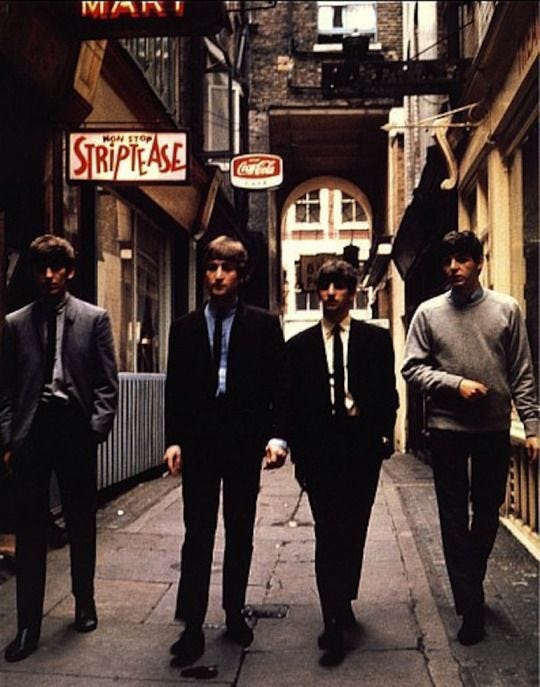
“There’s a famous photo of The Beatles that was taken in this alley. It’s called Rupert Court. If you google ‘Beatles and Rupert’ you’ll find it.”
I fished out my phone and searched for ‘Beatles Rupert’. There they were – the Fab Four walking down the same narrow alleyway in Soho, almost 65 years before.
Some things have changed – the Non-Stop Striptease joint is now a Reflexology spa, the cafe is now a hair salon – but the shape of the Rupert Court alleyway is largely unchanged.
I wasn’t previously familiar with the picture and hadn’t realised I was on the same spot.
“No, not many people know about it. I’ve lived here since the 60s and if I see somebody with a decent camera, I always tell them about the Beatles photo.”
“Well, thank you, you’re providing a valuable service,” I said.
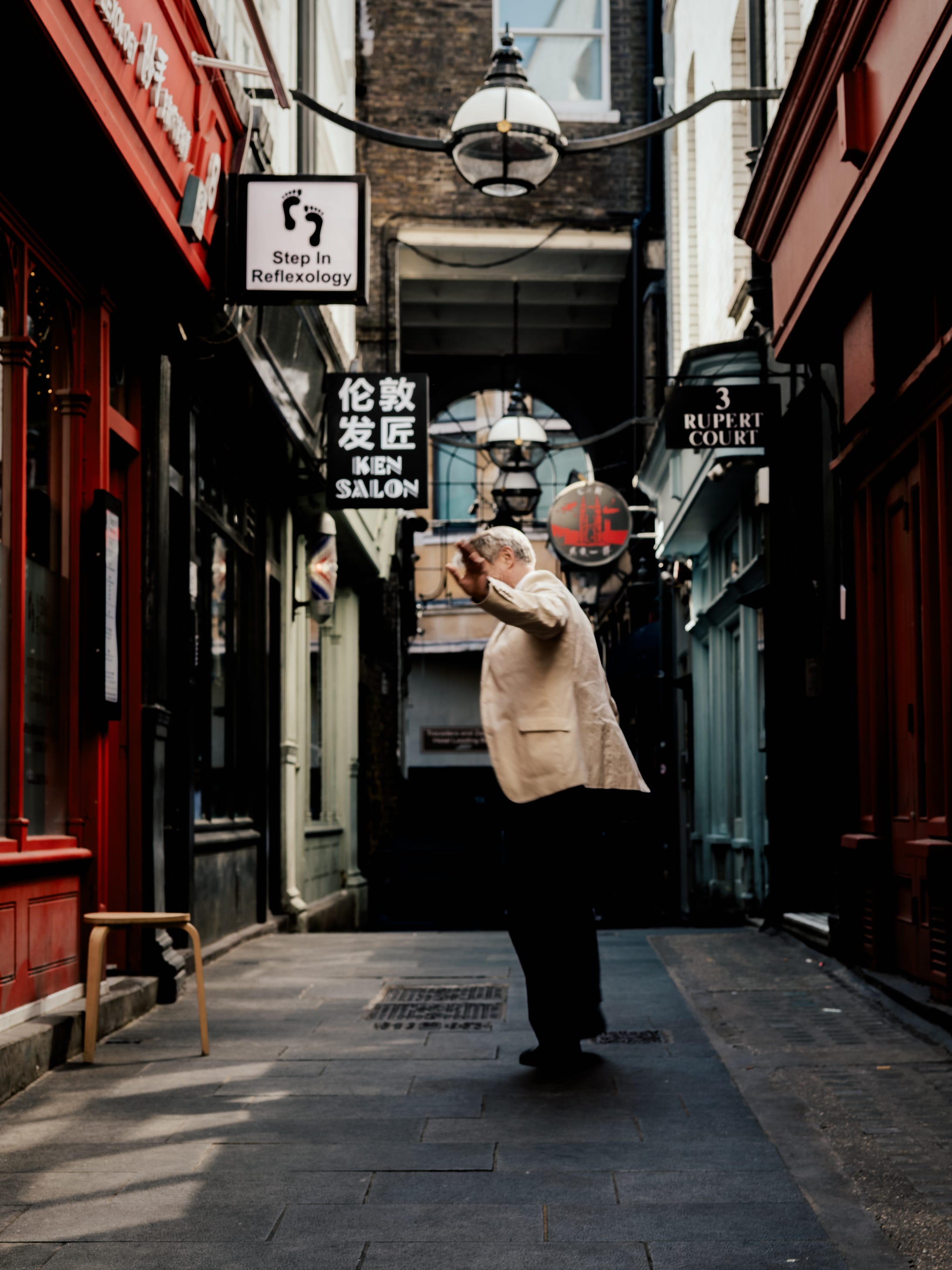
He laughed and waved a hand in the air as he strode down the alley, as if hurrying towards an imminent appointment. Perhaps a modest lunch with friends – potted shrimps, a sliver of Stilton and a glass of Chablis.
Recreating The Beatles and Rupert Court
I like the challenge of trying to recreate a moment from an old photograph. Finding the right position, a similar perspective, selecting the perfect focal length… It’s rarely possible to get quite the same angle, there’s always one ingredient that seems to be confined to the past, stuck in the moment when the original picture was made.
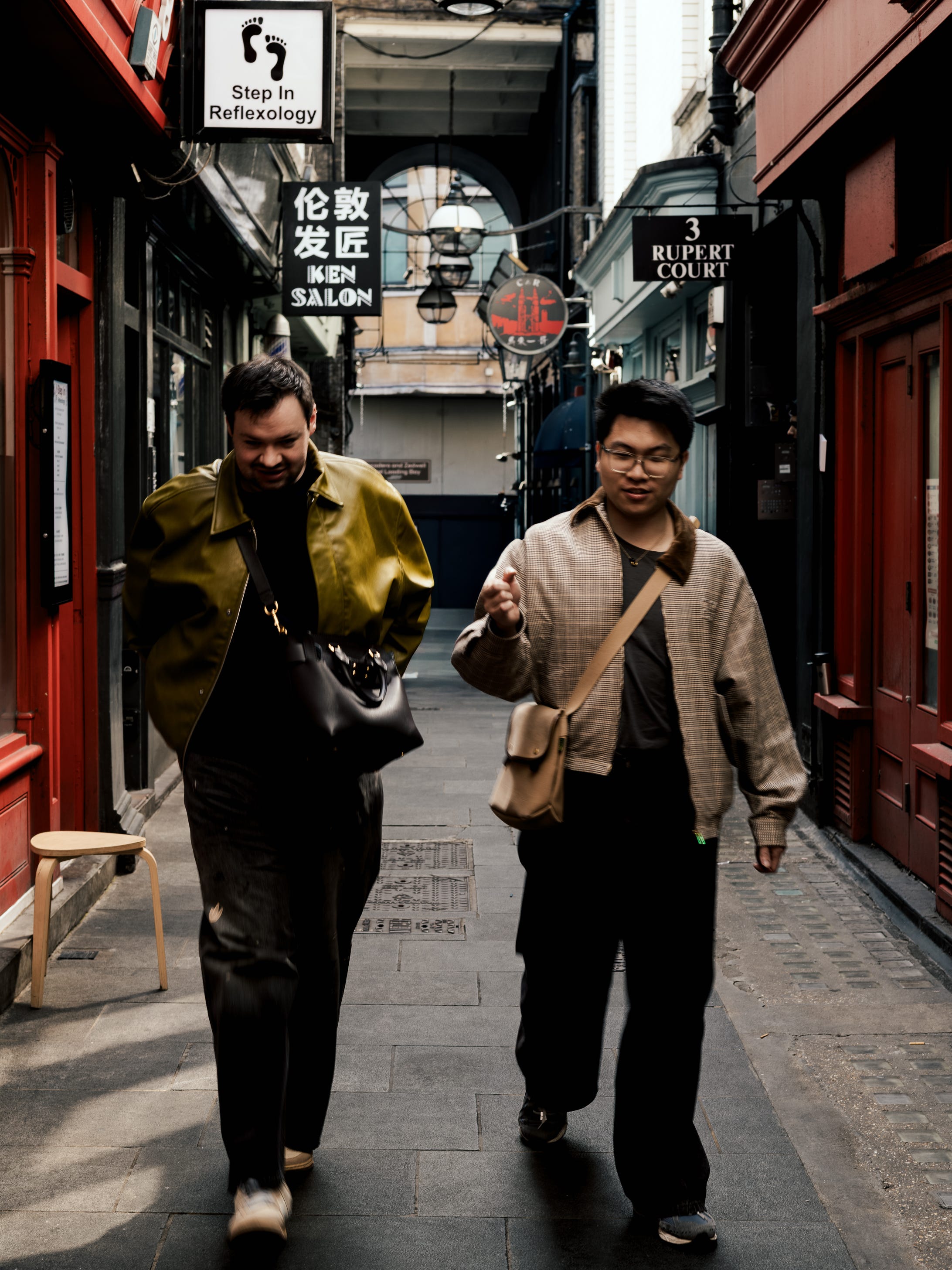
I’ve used my own Kodachrome 64 profile to emulate the 1963 film look – although I can’t quite bring myself to black out all the dark tones, as in the original. Poor George Harrison, destined to always walk in the shadows!
The Portrait that Never Was
I was lost in concentration, trying to find the perspective from the 1963 photo, when I heard a familiar voice behind me.
“You should google ‘Beatles. Rupert.’”
Two Japanese tourists with Nikon cameras were urgently tapping on their phones, searching for ‘Beatles Rupert’. My smart friend, returning from lunch, waited patiently for them to find the famous photo.
“I can save you the trouble. Here it is.” I offered them my phone with the photo of The Beatles in Rupert Court.
“Aha! You’re still here! Splendid!”
The two tourists inspected my phone, nodded their thanks, lifted their cameras and walked into the alley. I fell into conversation with my smart friend.
One of the things I miss most about living away from England is the ease with which it’s possible to strike up a conversation with a stranger. My language skills just aren’t up to the job elsewhere. We spoke about London, about places we knew, shared stories from the past. We chatted about the state of the world, about politics, about Ukraine and Russia. He described an article he’d read recently about an exciting advance in medical science. I shared the title of a podcast that I thought he might enjoy.
I cherish those impromptu chats with people met on the street. In London, I’ll have half a dozen memorable meetings when I’m out with a camera. Indeed, a camera is almost invariably the catalyst for a stranger to begin a conversation.
But I have a confession. As we were talking, part of my mind was elsewhere. I was thinking, I’d really like to make a portrait of this gentleman in Rupert Court. In my mind’s eye, I could see him standing in the same spot as The Beatles. I already knew the approximate angle to replicate the original photo. I had the right lens attached to my camera and the exposure settings were already dialled in. I imagined a portrait worthy of a place in next year’s Portrait of Britain photography contest.
As our conversation came to a natural conclusion, I delivered my invitation.
“Might I make a photo? You in the alleyway?”
“Of course. But we’d need three more people. There’s only one of me.”
And with that he set off down the alleyway, turning briefly to wave a hand in the air, striding towards another imminent appointment. Afternoon tea at The Savoy, perhaps.
I made one hurried photo. It’s obviously not the one I had in my mind’s eye. Not even close. My imagined, prize-winning portrait will join a number of other imagined scenes that sit in a mental archive of missed opportunities.
The one good thing about missed opportunities is that the imagined photos are always perfect – and don’t require processing.
To the friendly gent who introduced me to “Beatles. Rupert.” I say thank you and you’re quite right, there is only one of you.
Blind Patriotism
During my time in London I worked on a project photographing London architecture. It was quite different from the work I’m used to producing. The images are all high-contrast black and white and show famous London landmarks from unfamiliar perspectives, focussing on recognisable architecture but with a human element.
Unfortunately, the images are embargoed until after publication so I can’t share them yet, but I enjoyed the challenge of working in black and white and it’s always a pleasure to spend time in London.
It also provided me with an opportunity to see the new Banksy artwork in Waterloo Place. Blind Patriotism is a statue of a man in a suit (a politician?), stepping forward into a void, blinded by the large flag he is carrying. The symbolism isn’t hard to decipher.
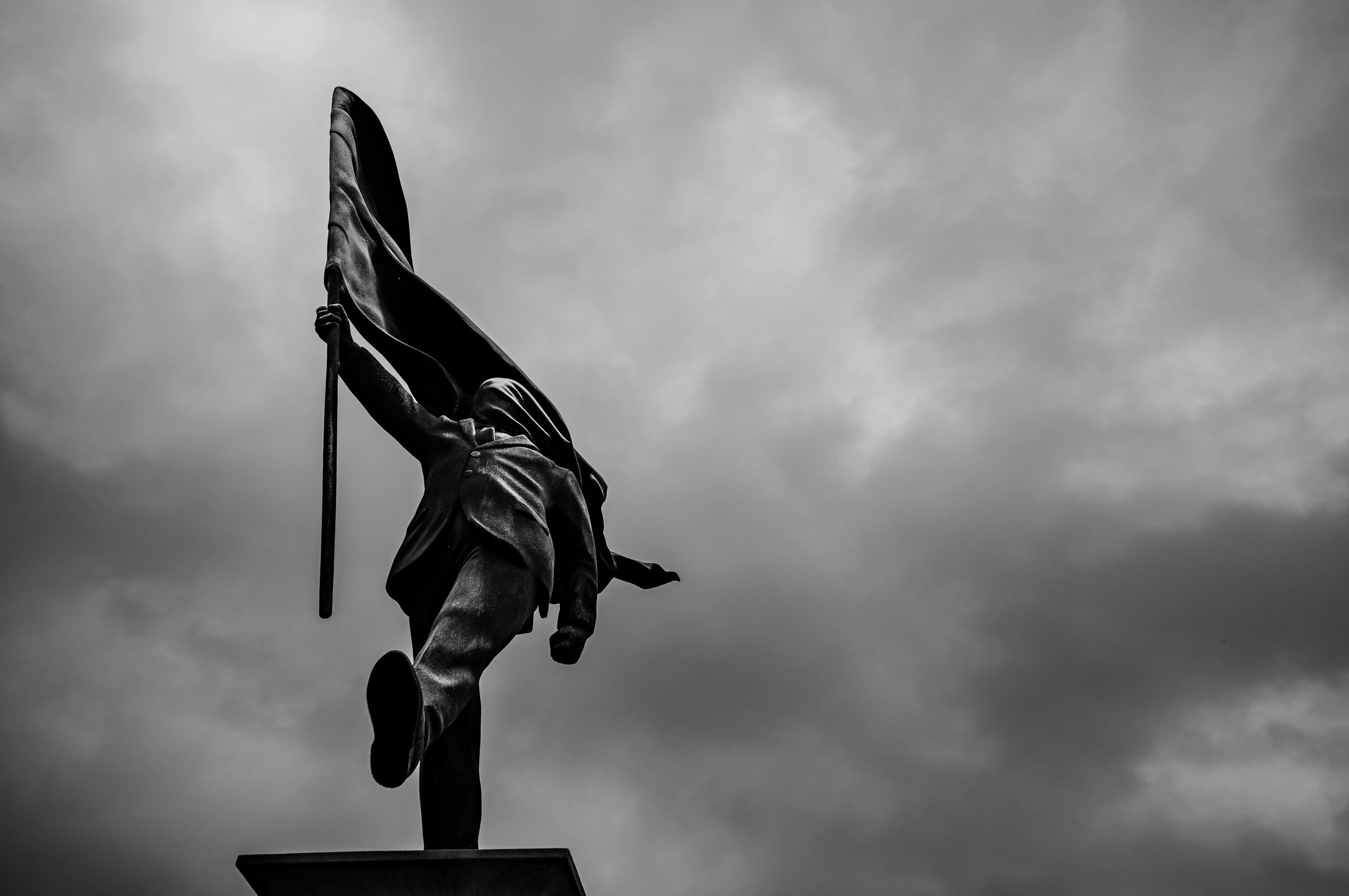
The enormous artwork was erected in the centre of London, alongside existing statues and memorials. In a city where the nonsensical safety announcement, “See it. Say it. Sorted.” is endlessly repeated on every mode of public transport, it’s impressive that Banksy and his mates were able to erect a statue, seemingly without interruption.
A Double-Decker Project
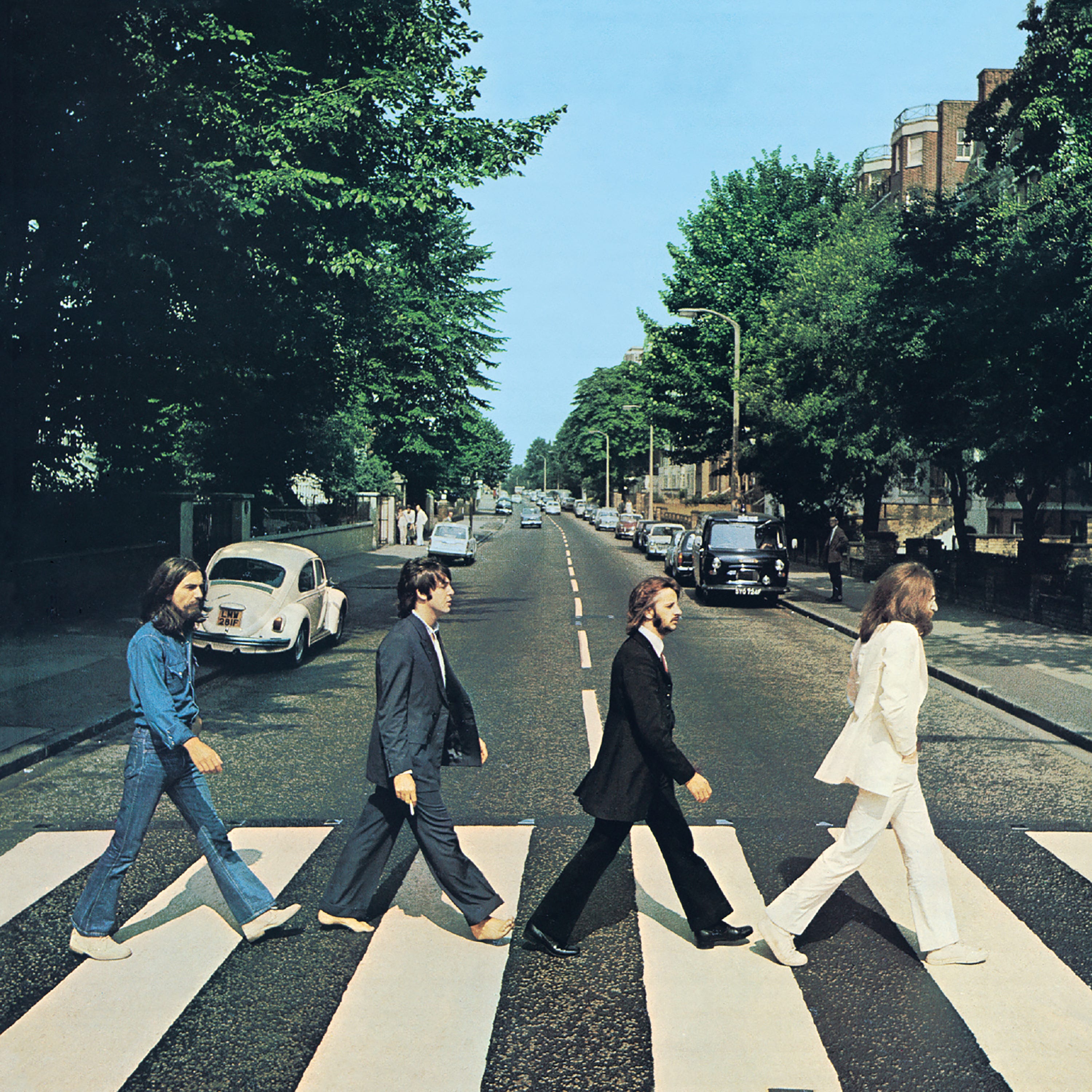
I stayed in an apartment on Abbey Road whilst I was in London, very close to the famous music studio and pedestrian crossing that appears on the cover of the Beatles’ album of the same name.
Each morning I’d take the bright red 139 double-decker bus from Abbey Road to Waterloo Station and begin my black and white architecture assignment. Every evening I would take a 139 bus back to Abbey Road.
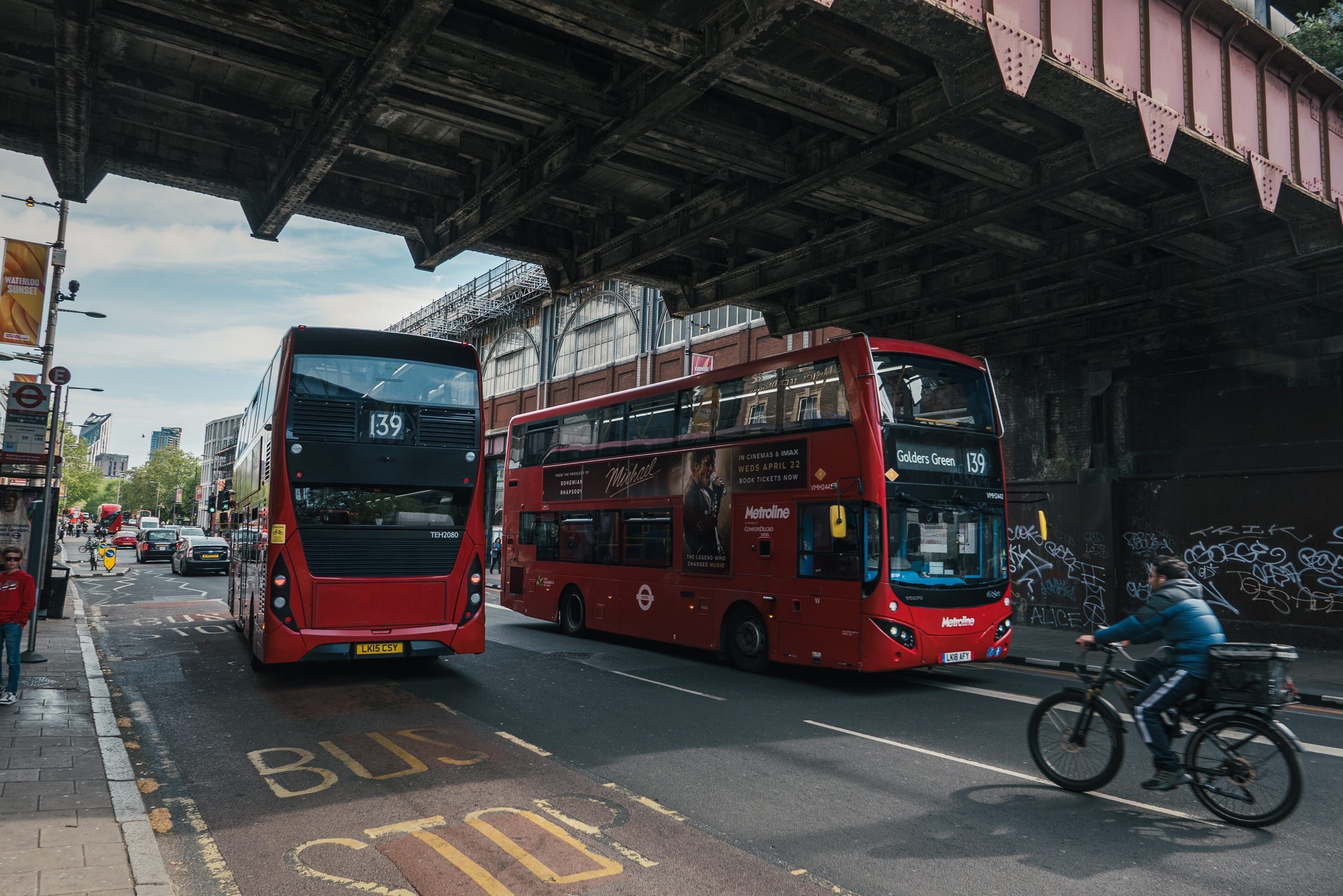
The 139 bus crosses the Thames, circles Trafalgar Square, travels up Regent Street and along Oxford Street to Piccadilly. It’s like a real life Monopoly board! The bus then heads north into the leafy suburbs of Maida Vale and Cricklewood towards its final destination at Golders Green.
In a throwback to misspent school days, I’d seek out the prime seat: upper deck, back row, beside the window. Looking out of the window of a London bus provides more fascinating viewing than anything you’re likely to find on Netflix.
You see tiny vignettes of the city, fragments of city-dwellers’ lives, all dreamily blurred by the patina of dirt and scratches of the bus window, but neatly framed within its borders.
On the third day, I decided to extend my bus journey and travel to the destinations at each end of the 139 line, making photos of the ever-moving city streets as the bus passed by.
A top-deck bus passenger has a unique perspective on the street: elevated above the height of pedestrians but still close enough to feel connected. Bus passengers travel on the street yet, anonymous behind glass, are one-step removed from it. This is very much how I prefer my social interactions – one-step removed and behind glass – so the bus is ideal!
I’ve collected two-dozen haphazard images from my trips on the 139 bus. You’ll find them on my website. Here are four that I like with some snippets of the description I’ve written to accompany them.
On the 139
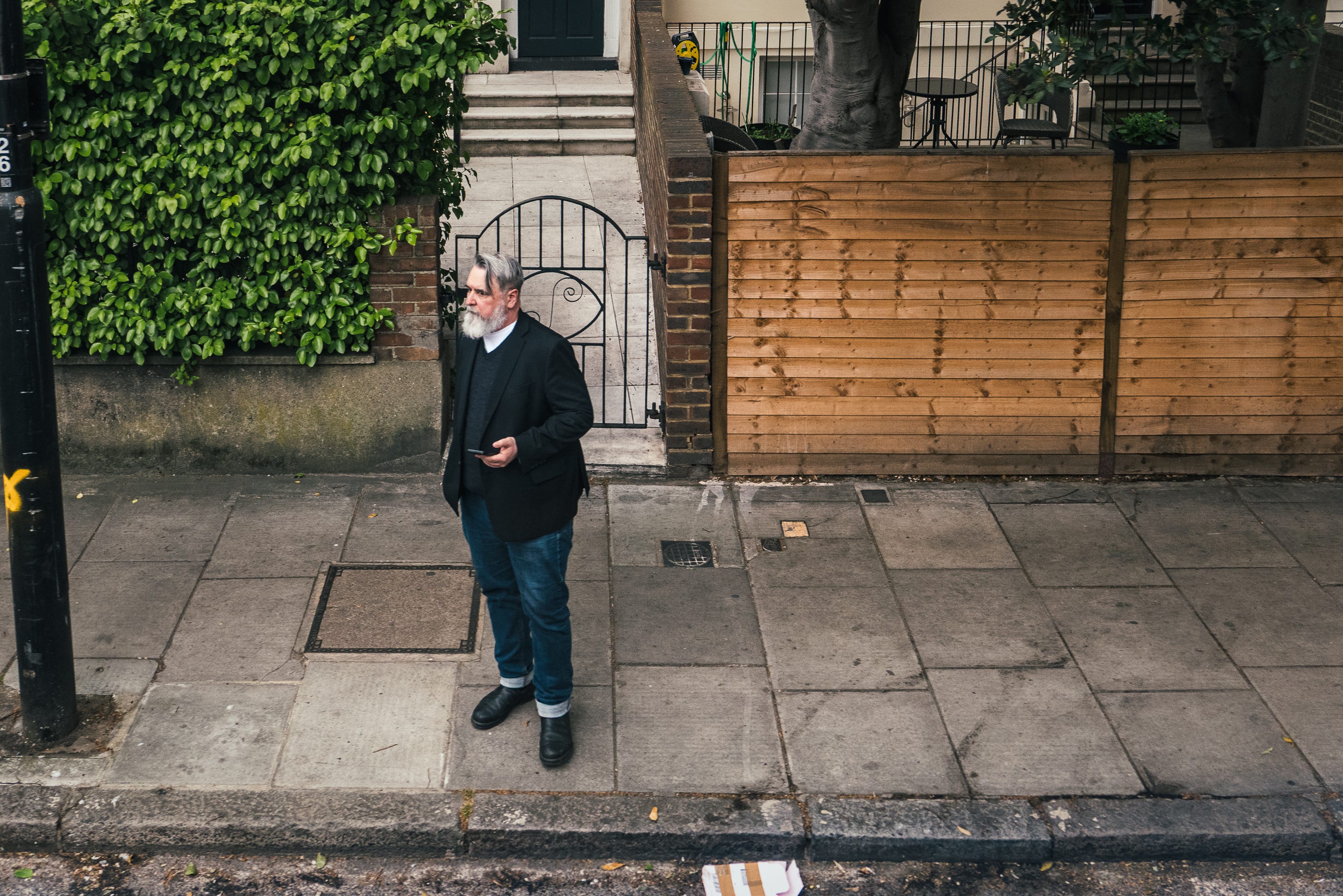
Famous landmarks, forgotten corners, bustling cafes, red phone boxes, animated buskers and park benches slide past, all neatly framed in the bus window. The bus is impartial, wealth and ordinariness are afforded the same amount of time. People are briefly glimpsed and then gone forever.
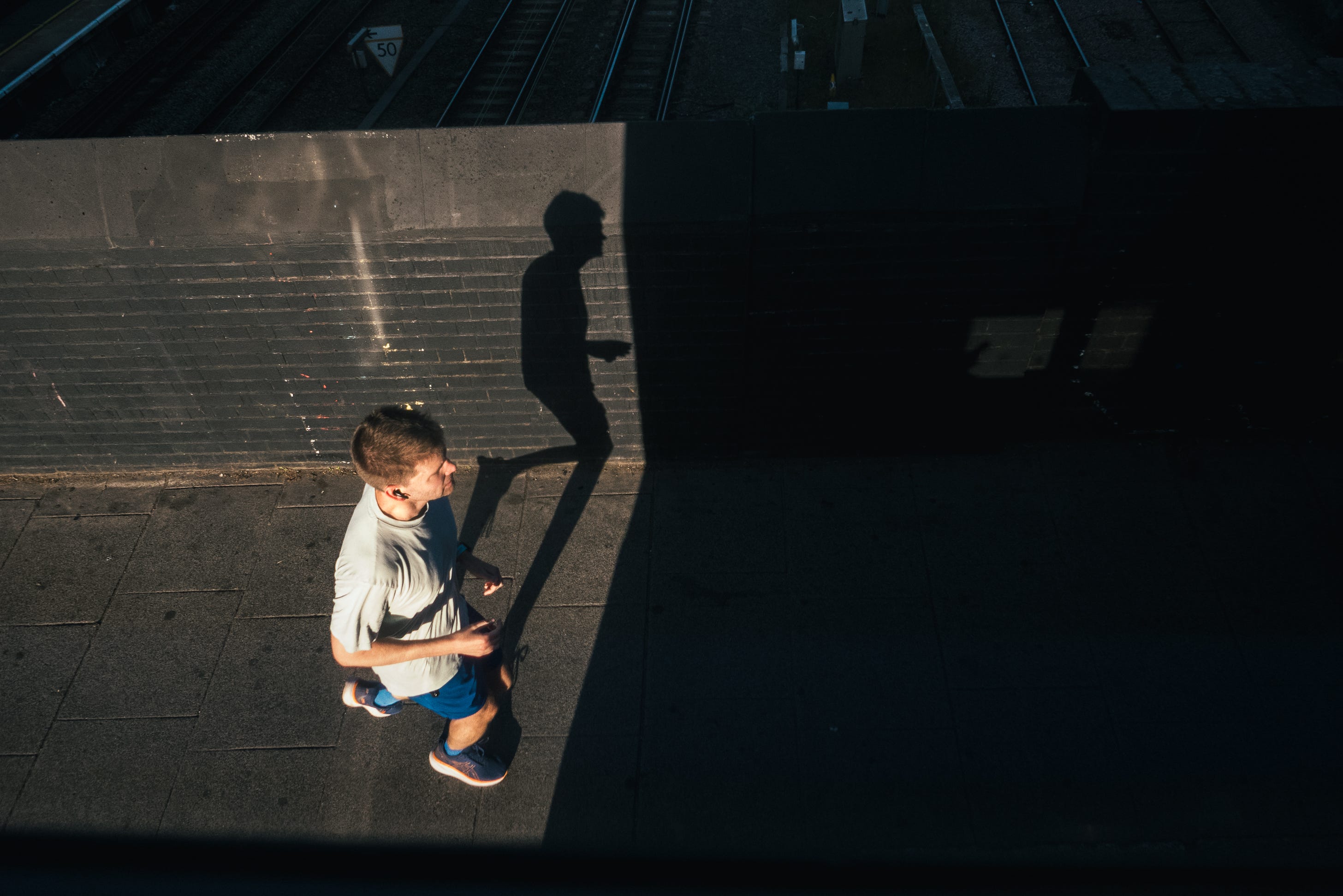
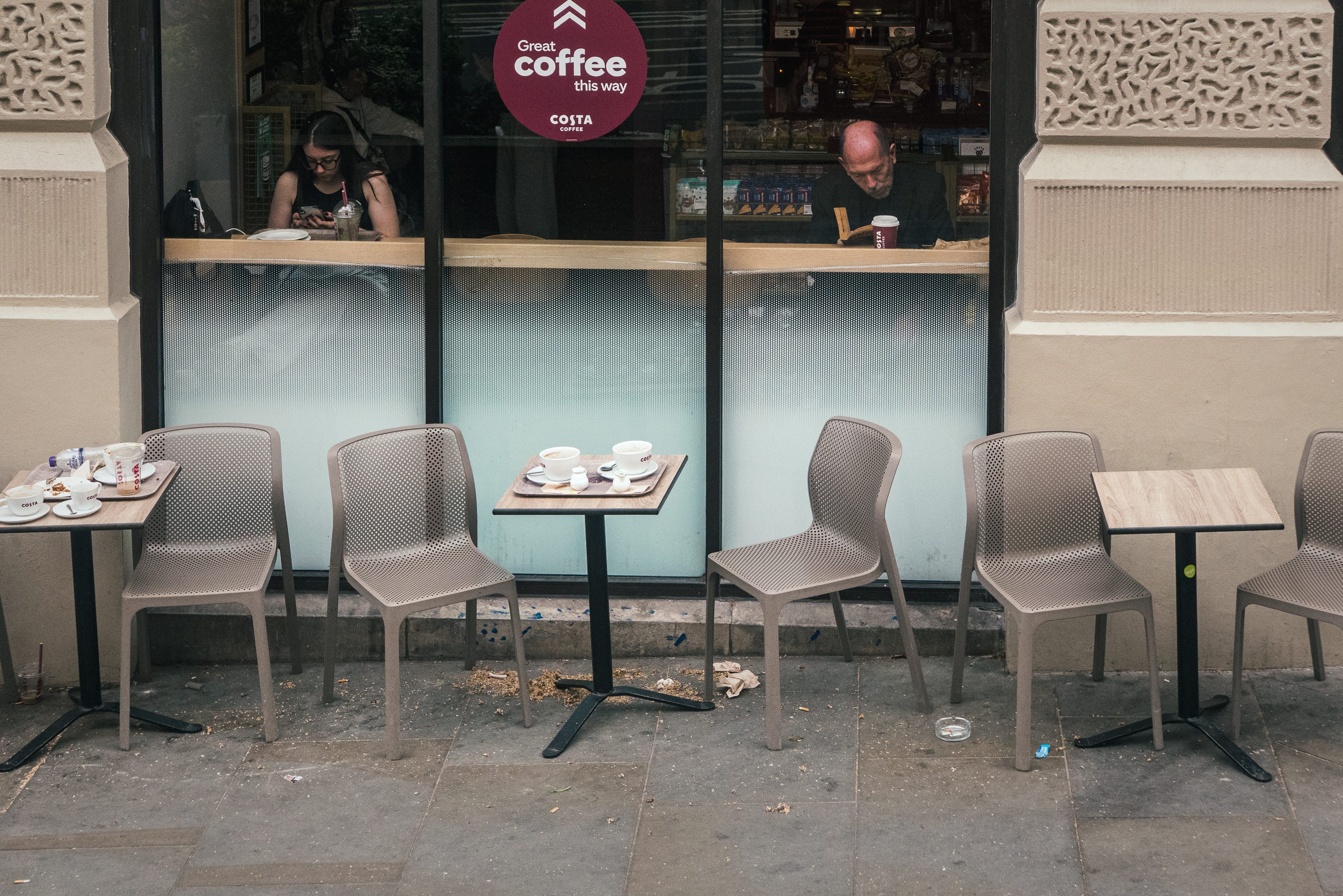
A jogger’s shadow is stretched upon a wall. And is that John Malkovich reading a book in Costa Coffee?
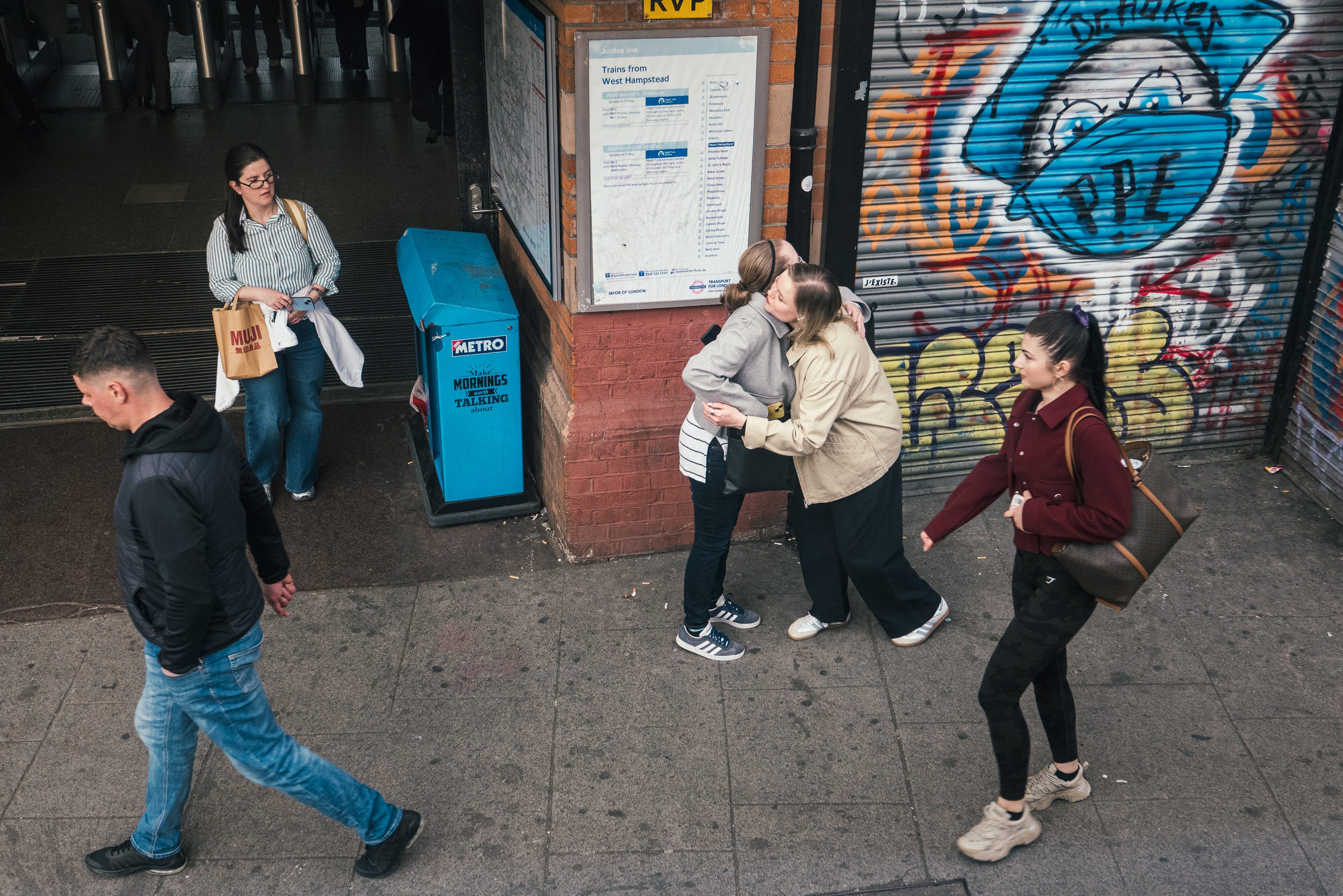
Two friends embrace outside West Hampstead train station, the warmth of their reunion unnoticed by passersby but bringing a smile to any bus passengers who chance to look outside the window at the right moment.
There is no time to dwell, no time to imagine what each life holds before the next appears. These city scenes flow past endlessly, a river of the everyday and unremarkable made important by the act of being, albeit momentarily, seen and considered.
On the 139 – a Top-Deck Photo Project
“Photography is neither the end nor the solution, but rather an invitation to look closer, to listen more carefully, and to deal more intensively with the world around us.”
– Frederik Rüegger – Leica Oskar Barnack Award 2025 Shortlist
The Wider Angle
Two Exhibitions
I made time to visit two exhibitions in London and have chosen one photo from each.
Sony World Photography Awards
Somerset House is a wonderful exhibition venue but even its endless corridors are not large enough to contain all the winning entries from the Sony World Photography Awards.
I noticed visitors further down a corridor pausing to take a closer look at one picture in particular. Many picked up their phones to make their own record of the image.
The title of the image is ‘Muscle and Milk’, made by photographer Paul Wenham-Clarke.

“Three young mothers in their rugby kit stand just after the final whistle has blown, each breastfeeding her baby. It’s a tableau of strength and nurture, muscle and milk, competition and care. The match is over, but the work never ends. Longing for a level playing field, they demand parity. Longing for visibility, respect, and equality. For the right to feed without shame. For the sporting world where motherhood isn’t an interruption but part of the playbook. This is not a staged protest, it’s just life, unapologetically lived and it’s time we caught up.”
– Paul Wenham-Clarke
Paul and the three rugby-playing mothers have said all that needs to be said. It’s a fine photograph.

Being There: Witness, Truth & Trust
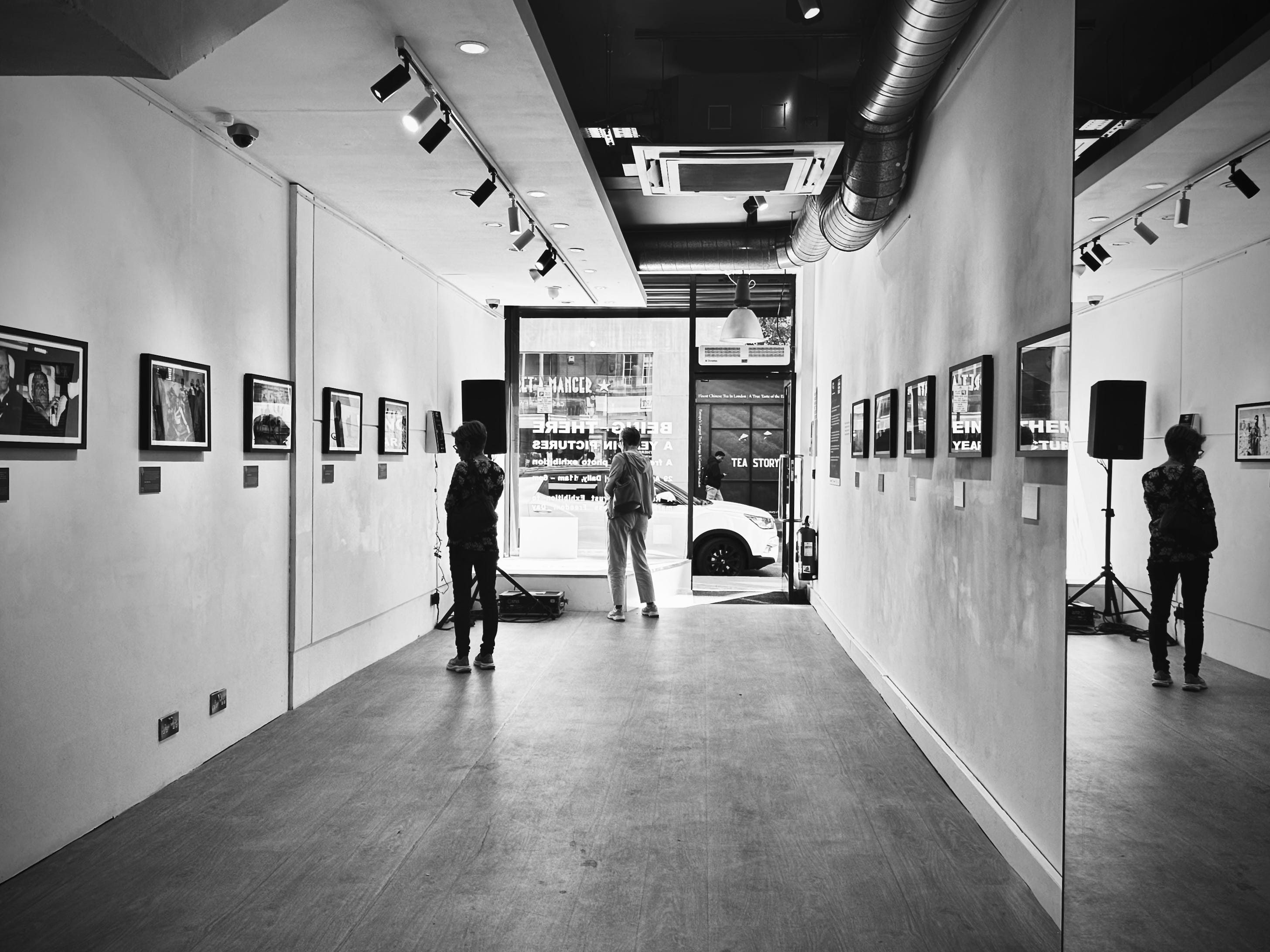
To mark World Press Freedom Day on 3 May, the Rory Peck Trust curated an exhibition of images from the world’s war-torn frontlines.
Journalists are increasingly targeted in war zones. The threat to photojournalists is especially high and their desire to freely tell the stories that we all need to see carries enormous risks.
Last year was the deadliest year on record for journalism. According to the Committee to Protect Journalists, at least 129 journalists and media workers were killed around the world.
The intimate gallery space belied the power of the images on display. One photograph shows the aftermath of an Israeli strike on a hospital.

The image beside it proved to be even more sobering.
It’s a portrait of the photojournalist who made the photo at the hospital, Mariam Abu Dagga.
She was killed by Israel, alongside four other journalists, while rushing to check on a colleague struck by Israel in al-Nasser hospital, where she had often reported throughout the war in Gaza.

Mariam was 33 years old. She had written two requests in her will: to her colleagues, do not cry at her funeral; to her 13-year-old son, Ghaith, make her proud.
She was posthumously honoured with the International Press Freedom Hero Award in recognition of her courageous reporting on the Gaza War.
The Rory Peck Trust and the Committee to Protect Journalists continue to advocate for, and provide resources to journalists working in dangerous situations and are always grateful for support.
My long-suffering editor often tells me that I should consider the flow of my newsletter content and avoid abrupt changes in tone. The next section illustrates how I have singularly failed to heed that advice. In my newsletter, as in life, the profound and the relatively inconsequential live side-by-side.
Xencelabs Tablet and Quick Keys
I’ve used a tablet for many years and find it easier than using a mouse, especially when refining masks in Lightroom or Photoshop, where precision is needed.
I’ve heard good things about Xencelabs products and recently picked up a Xencelabs Medium Tablet bundle, which is excellent.
As well as the tablet, two pens, various nibs and a robust travel case (nice touch), the bundle includes Quick Keys, eight buttons and a dial that can be fully-customised for different applications.
For Lightroom, I have different key settings for different modules. One for the Library, another for the Develop module, and a third for quickly adding ratings to images (see below).

I admire any product that does these three things:
Measurably improves an aspect of my life/work.
Works without fuss and doesn’t demand unreasonable time or effort to install and maintain.
Looks and feels like it was built by people who care about what they make.
I plugged the tablet in, picked up the pen – it worked. It took about 15 minutes to set up the customisations, I didn’t need to read a manual or watch a video tutorial. The Quick Keys allow me to move around Lightroom quickly. The pen sensitivity allows me to build layers in masks really easily, which is where it shines. It looks good, feels robust, isn’t glitchy or awkward.
I know something is working well when I forget about it. I spent a couple of hours editing in Lightroom and didn’t think about the pen or keys. It ticks all the boxes.
If you’d like to find out more about the Xencelabs tablets, you’ll find an affiliate link at the foot of this edition.
And finally…
I had the good fortune to be in southern England as the bluebells were at their finest. I took my 81-year-old mother for a walk in a bluebell wood near Winchester.
Indomitable as ever, she donned her wellies, grabbed her second-best hat and skipped along the paths like a teenager.
She’s always loved being outdoors and it was a treat to see her exploring with her camera, seeking out the best perspectives, finding the places where sunlight illuminated the blue flowers.
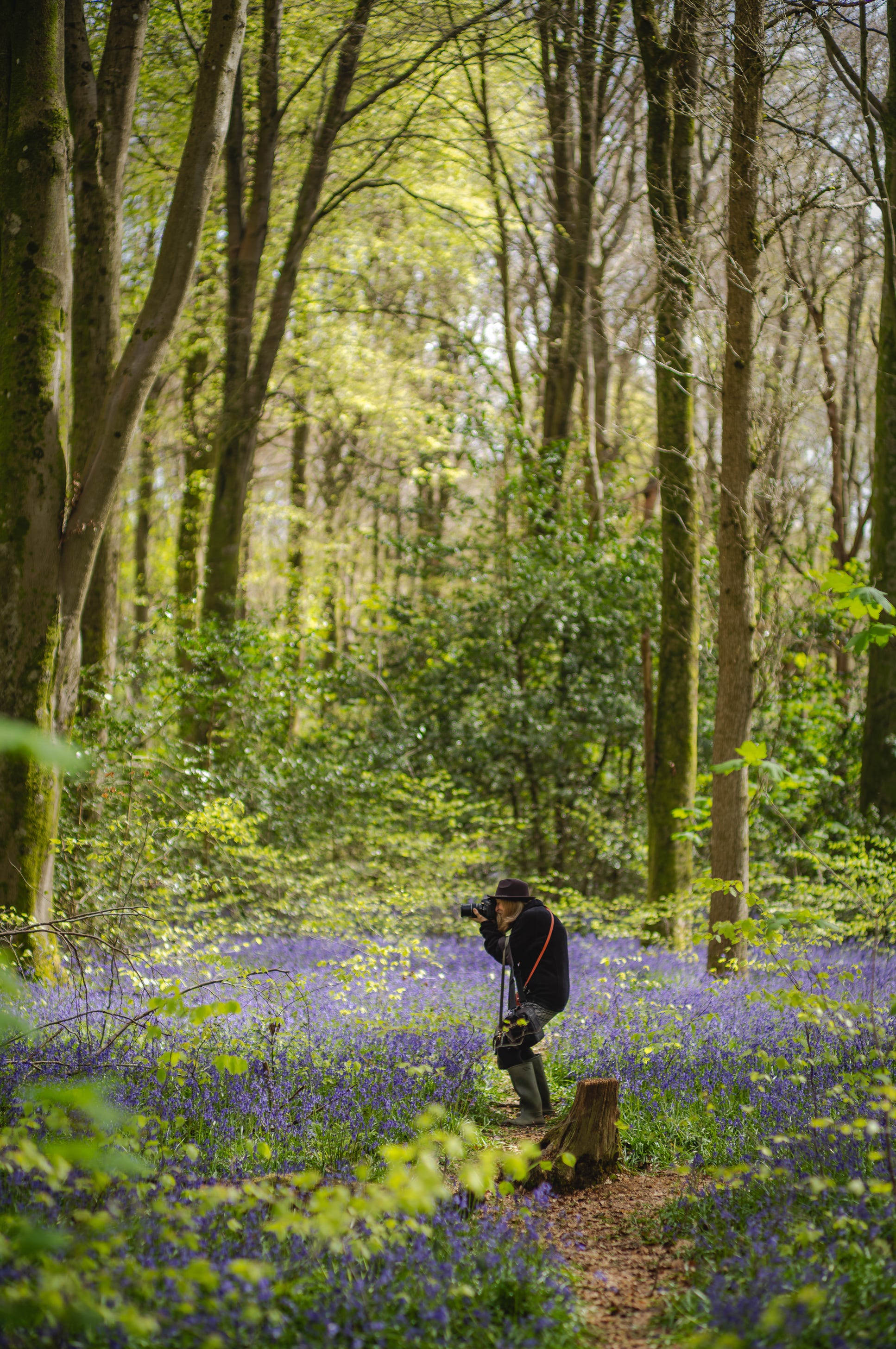
Whatever this week holds in store for you, I hope you can approach it with the enthusiasm of an 81-year-old in a bluebell wood.
Go well.

✤ Creative Inspiration
Lateral-thinking prompts, inspired by Brian Eno’s Oblique Strategies, designed with photographers in mind.
Read more and learn how to use my Oblique Strategies for Photographers.

What a wonderful time you’ve been having. Love the photo of your mum and of course the others. I too like your changes in tone. It actually works to emphasise different feelings you have as you read. There is depth and substance in your newsletters. Always learning about new things. Thanks!
Oh, I watched the ‘Shelter’ movie with Jason Statham and the BBC shipping forecast was in the background in one scene. I would have been unaware if not for your BTF 25 newsletter. Must read again. Thanks for making the archive so I could easily reference the old newsletter. Very useful.
I like your changes in tone; they allow for variety and pace, and humanise you in writing.
Were you a top deck back seat smoker? Seems incomprehensible now :)