

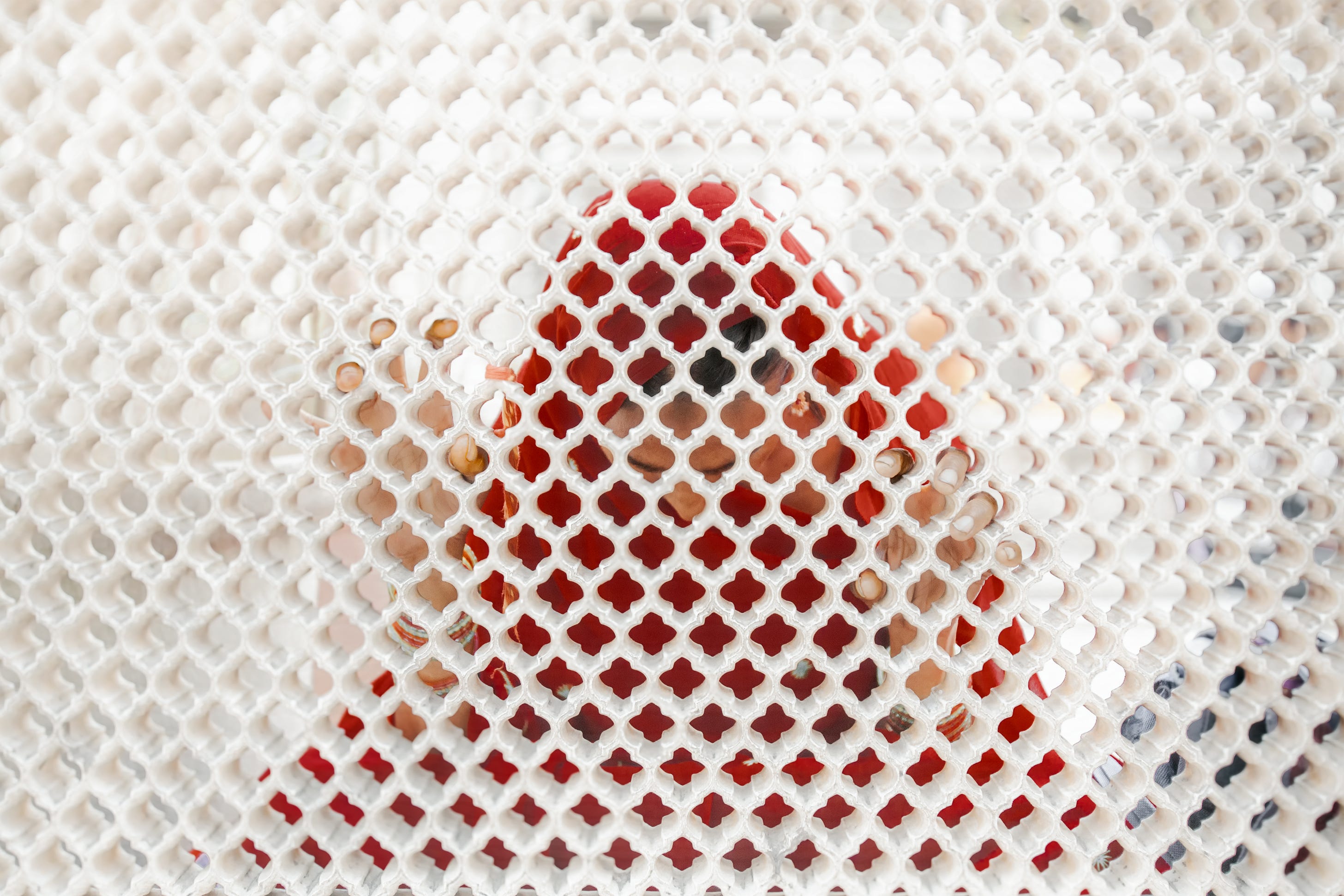
If it’s difficult at first to see the woman in the photo above, that’s intentional – my photo reflects the deliberate obstruction imposed upon women at this shrine. Women are prohibited from entering. They must offer their prayers from beyond a screen. Consequently, women at the shrine are only ever seen (by men) from this fractured perspective, never whole.
The provocative words, Witches and Bitches, exemplify derogatory descriptions applied to outspoken women throughout history. They are not my words. They are words that have been reappropriated by Magnum’s Global Cultural Director Andréa Holzherr, now used to describe independent, free-spirited, defiant women.
Celebrating defiant women
Andréa Holzherr has chosen images from the Magnum archive that show women protesting and resisting.
“For centuries, women who refused obedience have been given names meant to offend: Witch. Bitch. Words thrown at women who speak too loudly, desire too freely, live too independently, or simply step outside the narrow frame of what is considered acceptable.
Witches & Bitches are daughters, mothers, artists, lovers, fighters, leaders….they choose their own paths, define their own bodies, and invent their own rules.” – Andréa Holzherr


Listen
One of the images that caught my eye in the Magnum collection is this photo, entitled Imaginary CD cover for Sahar.

Newsha Tavakolian’s photo essay, Listen, highlights the restrictions placed on female singers in Iran, where women are effectively banned from singing in public performances.
“A woman’s voice represents a power that, if you silence it, imbalances society, and makes everything deform.” – Newsha Tavakolian
Newsha’s imagined album covers represent something that is not allowed to exist. In place of these women’s voices, there is only absence, silence.

Googoosh
Seeing imagined covers for music that is not allowed to exist is disturbing. I wanted to find some balance, some examples of Iranian women singing, either before the 1979 revolution or from the Persian diaspora.
A quick search led me to Googoosh, an Iranian singer described by the New York Times as “Iran’s Barbra Streisand, Linda Ronstadt, Cher, Edith Piaf and Madonna rolled into one.”
“Her songs were romantic, not political, and while they drew on Western styles, they held onto both the fervour of Persian love poetry and the sliding, quivering, impassioned phrasing of traditional Persian music.” – New York Times
Googoosh’s level of fame inside Iran cannot be overstated. Not only was she a famous singer, she acted in nearly 30 films, made regular TV appearances, was a popular trend-setter and revered fashion icon.
“Her fans saw her as a person who did not tolerate injustice, who did not shirk her responsibilities toward her art and the people, as well as a source of inspiration for women who were fighting against stone-age expectations of a patriarchal society.” – From iranwire.com
After the 1979 revolution, Googoosh was forced to stop singing in public. For 21 years she was silent, until finally given permission to tour overseas in 2000.
“She was decidedly modest, wearing long dresses and gesturing almost entirely with graceful arms and hands, restraining herself from motion below the shoulders. For her encore she came back barefoot. It was an uptempo song, and she was shaking with, apparently, the suppressed urge to dance, until she allowed herself a final kick.” – New York Times
Here’s Googoosh performing at Expo 2020, shortly before announcing her retirement.
Googoosh’s music has been playing almost non-stop in our house this week. I have not suppressed the urge to dance, a privilege I am acutely aware not everybody enjoys. For what it’s worth, I’m proudly dancing on the side of the witches and the bitches.
«داستان من فقط داستان من نیست. این روایت گذشته ماست، سرزمینم، آنچه بود، آنچه شد و آنچه بر مردم و بر هنرمندان گذشت.»
– Googoosh
“My story is not only my story. This is the narrative of our past, my homeland, what it was, what it became, and what befell its people and its artists.”
Beyond the Frame Recommendations
Articles, documentaries, exhibitions, podcasts and more.
▲ Listen – Get Birding with Sean Bean

Yes, truly, this birdwatching podcast is presented by proud son of Yorkshire turned Hollywood star, Sean Bean.
What’s next? Train Spotting with Meryl Streep?
How has a birdwatching podcast presented by Sean Bean found its way into a newsletter celebrating independent women?
Well, it’s the result of a series of connections – much like a game of Six Degrees of Kevin Bacon – which led me from Sean Bean to Googoosh:
In the birdwatching podcast, Sean Bean chats with Guy Garvey, lead singer of uplifting chart-toppers, Elbow.
Guy Garvey presents a superb weekly BBC Radio show, Guy Garvey’s Finest Hour. On International Women’s Day he interviewed English folk music’s rising star, Katherine Priddy.
Katherine Priddy’s new album, These Frightening Machines, features the track Matches, about medieval witch trials and the language we still use to describe them.
“Remember you who tell the tale of how we climbed those pyres,
They weren’t burning witches, it was women on those fires.”
I was listening to Katherine Priddy’s album when an email from Magnum landed, including a link to their article reclaiming “Witches and Bitches”.
That article introduced me to Newsha Tavakolian’s photo essay Listen, about the silencing of women singers in Iran.
In turn, Newsha’s essay led to my discovery of Googoosh, the famous Persian singer whose voice was silenced by cultural restrictions.
There you go: Sean Bean to Googoosh in six easy steps.
I can recommend the birdwatching podcast. It’s beautifully produced, measured and gentle. Sean Bean, who’s been an enthusiastic bird watcher for a lot longer than he’s been an actor, speaks with genuine affection about his love of nature and explains how it’s kept him grounded and “sane” during his long career.
★ Engage – Canon Female Photojournalist Grant

This is the twenty-sixth year that Canon will be recognising the work of a female photojournalist. This year’s recipient will be announced at Visa pour l’Image in Perpignan in the summer.
★ Engage – Camille Lepage Award

I wrote about the all-too-short life of photojournalist Camille Lepage in Beyond the Frame 47/. This will be the twelfth annual award of a grant given in her memory and will also be awarded at Visa pour l’Image later this year.
❖ See – Gordon Parks in London and Atlanta

“Some exhibitions feel important. Others feel necessary.” – Jackson Fine Art Press Release
From the 1940s to the 2000s, photographer Gordon Parks documented everyday life in America, showing the impact of injustice and discrimination. Two exhibitions concentrate on Parks as a humanitarian, motivated by a desire for social justice.
“I picked up a camera because it was my choice of weapon against what I hated most about the universe: racism, intolerance, poverty.” – Gordon Parks
If you’re in London or Atlanta in the coming weeks, seeing Gordon Parks’ evocative photographs would be time very well spent.
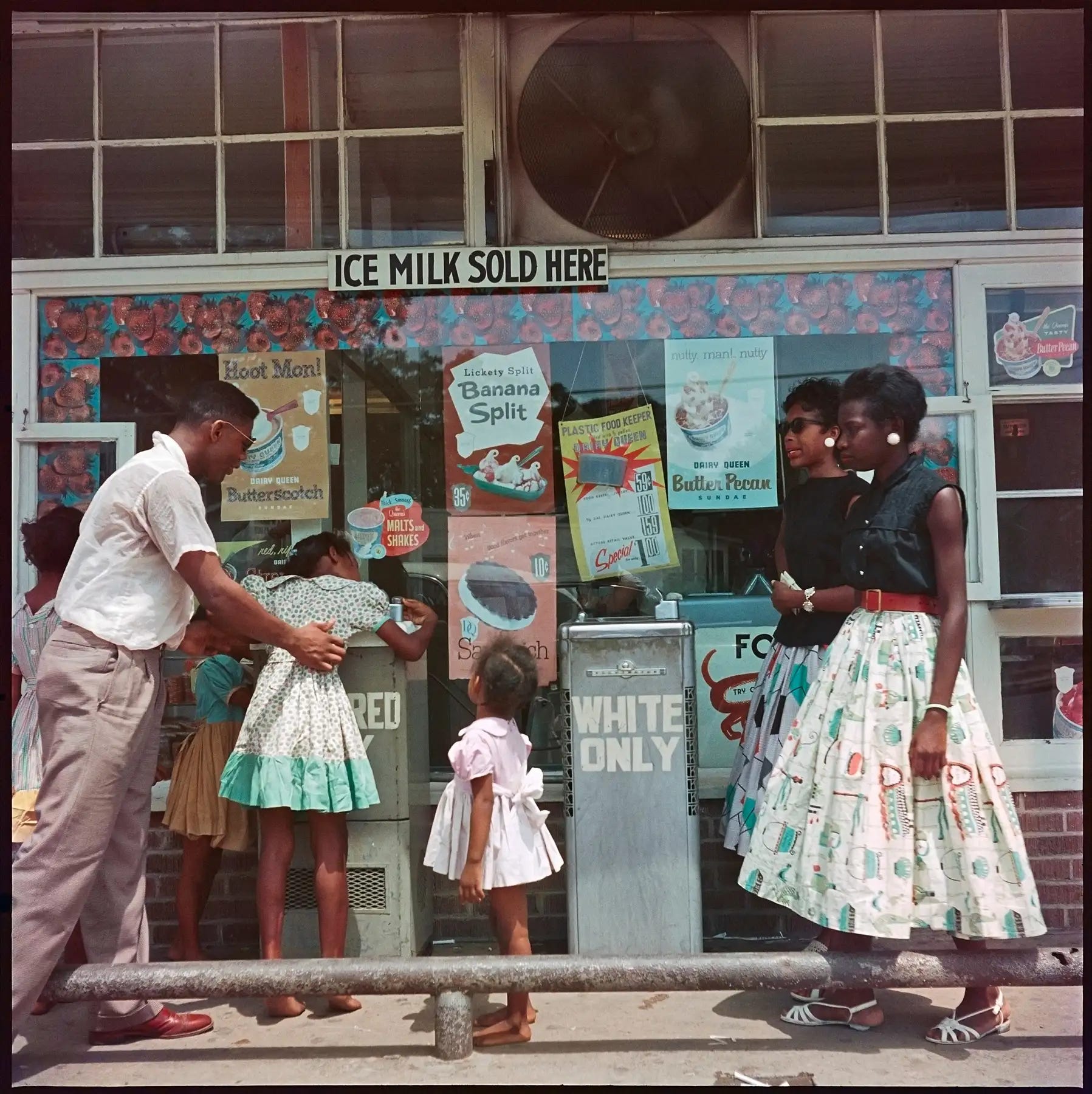
Gordon Parks exhibitions
See Gordon Parks: We Shall Not Be Moved at the Alison Jacques Gallery in London, from now until 11 April 2026.
See Gordon Parks: The South in Colour at the Jackson Fine Art Gallery in Atlanta from 2 April to 13 June, 2026.
✤ Create
A series of creative prompts, inspired by Brian Eno’s Oblique Strategies, and designed with photographers in mind.

Read more about the concept and learn how to use my Oblique Strategies for Photographers.
And finally…
I intend to spend much of the weekend listening to Googoosh and Katherine Priddy. I hope that whatever you have planned for the weekend lifts you up.
Until next time, go well.

◼︎ Directory: Archive of Beyond the Frame newsletters.
◼︎ Resources: Recommended books, films, gear, media etc.

Related editions:
Beyond the Frame 47/

Rediscovering a spark of childlike enthusiasm and honouring the life and work of photojournalist Camille Lepage.
Beyond the Frame 45/

Marking International Women’s Day with pictures of a Women’s co-operative in Nepal, a look at National Geographic’s ‘Women of Vision’, and the pressures young women face in the age of the smartphone.
Great post Gavin, thank you. Witches and Bitches unite!