

When Photography Matters Most
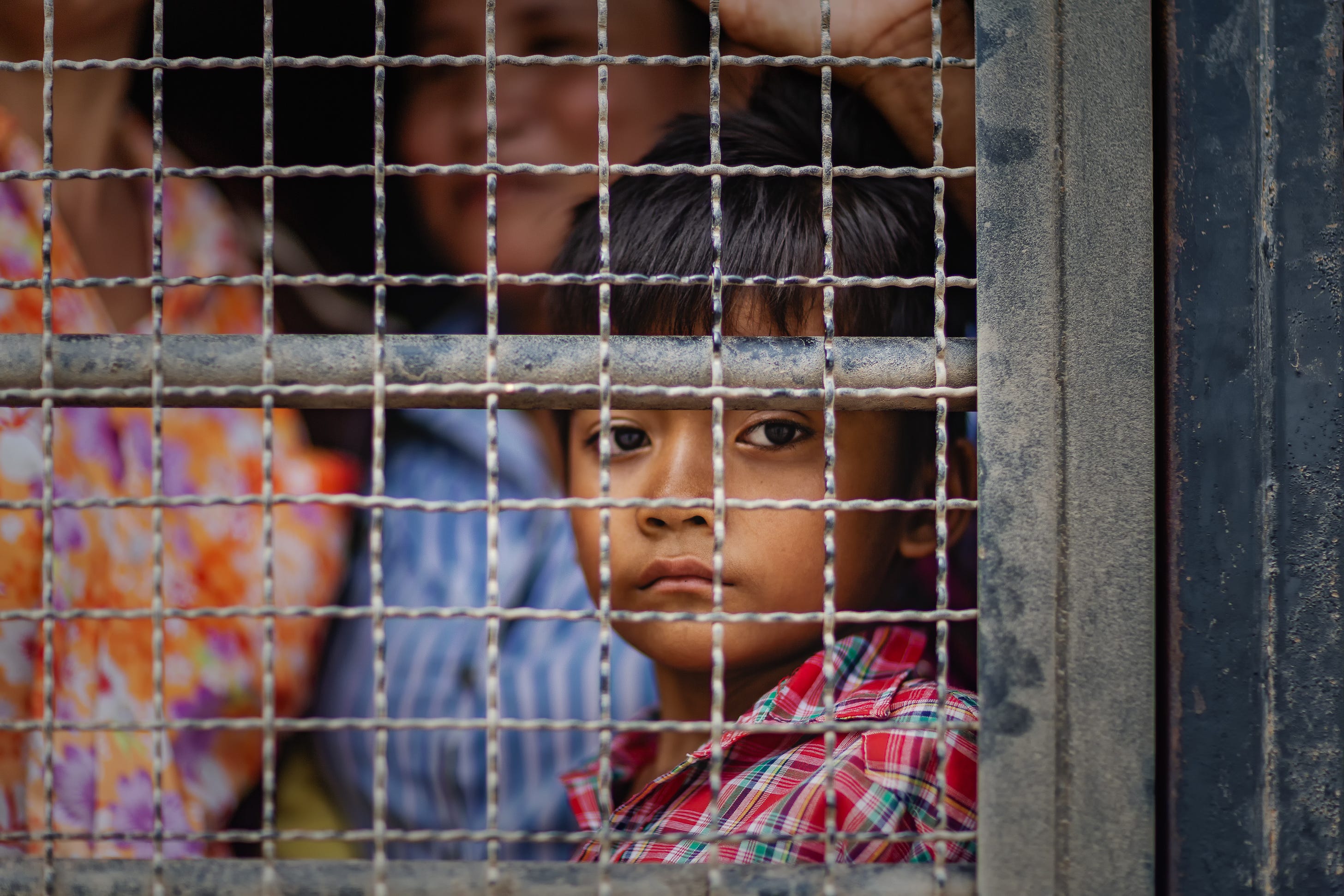
Can photography go beyond the role of spectator?
When the stakes are high, can photographs empower movements and influence political will?
In times of crisis, how can photographers negotiate responsibility, integrity and veracity?
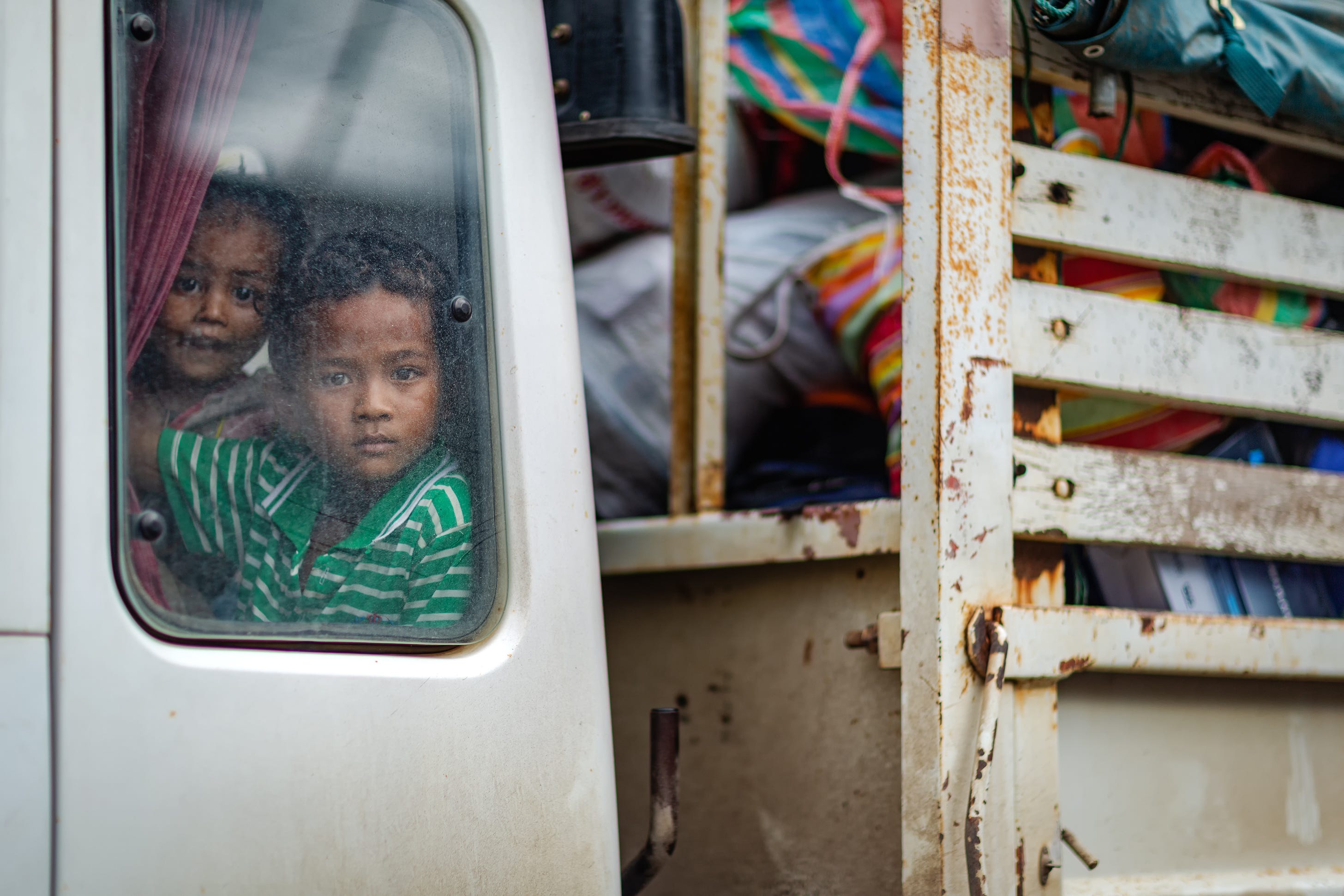
I like the idea of a new year. Wiping the slate clean, drawing a line under the previous year, calculating the sum of the good minus the bad and reckoning the balance. Then starting afresh, back to zero. All things are possible and there are sunlit uplands ahead. So long 2025. Welcome 2026!
I understand it’s just an arbitrary date in the calendar but even so, the concept of a new year is always appealing to me. Even the date “1/1” suggests being back at the start of something, ready to build bigger and better.
This year, that feeling lasted for about… I don’t know… maybe two days. That’s how long it took for the news feeds to overwhelm my enthusiasm for a brighter year ahead.
There’s a division between the personal and the societal, of course. Personally, I’m still full of beans and hopeful anticipation. The year ahead is full of lively opportunities. But when it comes to the wider world, optimism might not feel like the most instinctive response.
Conflicts continue, wars are waged, intolerance and bigotry are the new black. No matter which side of any political divide one falls, only an unrelenting Pollyanna could claim, “Don’t panic. Everything is perfectly fine.”
We’re in the middle of a climate crisis. There’s a migrant crisis. And a cost-of-living crisis. A humanitarian crisis. A crisis of trust in the media and institutions. And it isn’t all political hyperbole. The evidence is clear. As we enter 2026, this is our world: a world in crisis.

What can we do?
As photographers – and simply as individuals – it might feel overwhelming. It does feel overwhelming. What role, if any, can photography play?
“In the face of human suffering, being equipped with nothing but a camera can leave a photographer feeling ‘helpless’ – the word of Magnum’s Mark Power. But Power, photographers like him, and the agencies who commission them, are driven by a sense of duty, not only to tell the human story but to create an historical record.”
– From Magnum’s article, Photographing a Crisis.
Mark Power is one of several Magnum photographers who have documented the issues surrounding the migration of people displaced from their homes by conflict, famine and natural disasters. He’s clear about the role of photography.
“I believe strongly in photography as a mark of history to carry forward to future generations to learn from.”
– Mark Power
The Power of a Photograph
I don’t believe that a single photograph has the power to change the world. If only that were so. But a still image can provide a moment to pause, to consider. A photograph can register in the mind, and be recalled more readily than film footage or an editorial column. This is the power of a photograph.
Many people believe that Nick Ut’s photograph, often referred to as Napalm Girl, made by Nick in 1972, altered the course of the Vietnam war. It’s fair to say that when the photo appeared on newspaper front pages around the world, resistance to the war was immediately hardened, the will of those who objected was reinforced and the arguments for maintaining the conflict were weakened.
I probably don’t need to post Nick’s photo here because if you’ve ever seen it, you will be able to bring it to your mind’s eye, even though it shows merely a fraction of a second from more than 50 years ago. This is the power of a photograph.
Documentary photographers have a responsibility to bear witness, to share what they’ve seen without embellishment, often without comment. They say, “This is what I saw. Look.”
The agency for change does not lie with the photographer or within the photograph. It resides in us, the viewers. We make the interpretation, we choose whether or not to act.
And that, I think, is likely to be my theme for 2026. Not advocacy, not instruction – but attention. I’ll continue to share work that has a voice; projects made with care, intention and integrity. Because if documentary photographs matter, they matter not as solutions but as questions – invitations to look, and to think.
Children of Europe by David (Chim) Seymour
An early example of a photo essay which documents personal stories from a mass displacement event appeared in a 1949 book, Children of Europe.
David (Chim) Seymour travelled through Austria, Greece, Italy, Hungary and Poland, after the Second World War, documenting the lives of refugee children who had experienced mental and physical trauma.
After 75 years, the uncomplicated portraits in Children of Europe still resonate.
“Chim’s heart had always gone out to children, and they reacted to him with complete acceptance. They seemed oblivious of him, but he noticed every little movement, every little pain, every little pleasure. There is no artifice, no bravura of lighting expertise in Chim’s photographs of the children. They speak simply from his pictures.” – Inge Bondi
Children of Europe serves as an enduring record of the plight of post-war children, carrying with it an implicit plea from the innocent that future generations prevent the repetition of such atrocities.

The book begins with a poignant message from an imagined child survivor: Letter to a Grown Up.
“For you, childhood memories bring back some of the happiest years of your life: home, school, a garden or playground, your village or your street; your mother, distressed because your knees were scratched your pants torn… No doubt, your childhood was filled with dreams of Christmas turkeys, fancy dresses, or dolls dressed in satin and embroidery.
Our childhood was different.
We have been cold and hungry, and lived in filthy conditions. We have all witnessed violence, and frequently we have been its victims. Our life has meant only threats and hardship.
Do you know what this means? Have you ever thought of the extent of the disaster? Open your eyes and your hearts; learn to see and understand.
We homeless children have our neighbours for a family and you grown-ups are our country. We ourselves shall be grown-ups in a few years and, if we then see that millions of us have been abandoned a second time, we certainly shall lose faith in that ideal for which you fought.”
– From “Letter to a Grown Up” from “The Children of Europe” (1949)

It’s impossible to see those children looking out at us from sepia-aged photos and not feel their sense of yearning. Young boys with shaved heads looking directly into a lens, facing an uncertain future. Do their expressions tell us what they most desired in that moment? A bed with sheets? A change of clothes? A meal? The warmth of human affection? To go to sleep expecting breakfast in the morning, not bombing.

Conclusion
Inevitably, we each bring our own preconceptions to the images we see. Interpretations will be as many and varied as the number of people viewing the photos.
But one thing is indisputable. Images like these provide a priceless record of an event that we can learn from. They show the effects of conflict, the consequences of a failure of empathy. They illustrate what happens when we dehumanise others, when we create divisions between us and them.
The images alone cannot determine the lessons we take. What we learn is dictated by our morals, our sense of fairness, our humanity – and our willingness to stand up for what we believe to be right.
“ I have been a witness, and these pictures are my testimony.
The events I have recorded should not be forgotten and must not be repeated.”
– James Nachtwey
Beyond the Frame Recommendations
Articles, documentaries, exhibitions, podcasts and more.
☆ Read – Photographing a Crisis
A summary and reflection of Magnum photographers working on migration projects.

◉ Listen – Ed Kashi interview
A wide-ranging interview with photojournalist Ed Kashi, which covers many aspects of the work of a documentary photographer.

▶︎ Watch – War Photographer
A documentary following James Nachtwey, one of the most highly-respected photojournalists working today.
⦿ Learn – RSF 2025 Round-up
Reporters Without Borders summary of 2025, the deadliest year for photojournalists.

✤ Create
A series of creative prompts, inspired by Brian Eno’s Oblique Strategies, and designed with photographers in mind.

Read more about the concept and learn how to use my Oblique Strategies for Photographers.
And finally…
I’m on my way to the Foreign Correspondents’ Club in Bangkok, where political leaders will be engaging in a debate, hoping to persuade voters in the upcoming Thai election on 8 February.
It promises to be a lively election campaign, as they invariably are. I’ll be in Bangkok until the results are announced. I’m sure it will prove to be a fascinating start to the year.
Whatever 2026 has in store, I hope you find peace and contentment somewhere along the way.
Until next time, go well.

Directory: Beyond the Frame newsletter archive.
Resources: Recommended books, films, gear, media etc.
Beyond the Frame 82/

A review of 2025.
The most popular newsletter articles and my favourite photo events, books, podcasts, documentaries, gear, and more.
Gavin! Excellent issue of Beyond the Frame! (I'm slowly making my way to the last edition after a bit of traveling), this edition reminded me of the work of Gerry Yaum, a local photographer who has been raising money over the years to help some of Bangkok's most invisible communities. Truly the humblest person I know. And he works almost exclusively in large format film, but the spotlight is of course the subject. A link, for your viewing pleasure: https://the-families-of-th-3.gerryyaum.net/sets
I’ve watched James Nachtwey doc 3 times so far. Still great, still valuable, still on time.
Have a good year ahead.