

A word as a lens
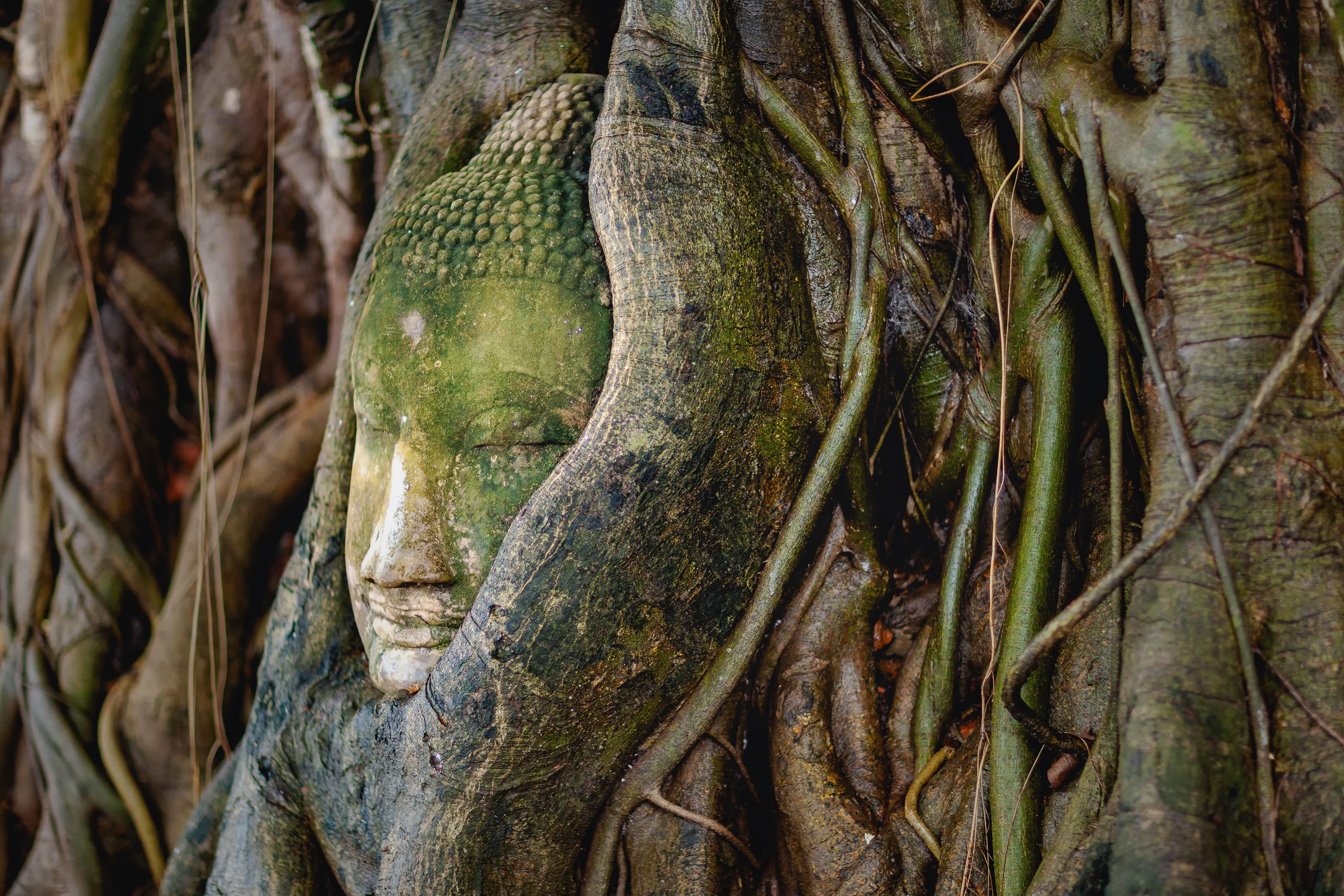
What words might you use to describe this image of a stone Buddha head wrapped in the roots of a banyan tree?
Ancient? Buddhist? Historic? Overgrown? Sacred? Spiritual? Weathered?
Those suggestions were made by an AI analysis of the picture. No doubt you can think of many more. As keywords, added in retrospect, they do their job, allowing the image to be found by somebody searching for those key terms.
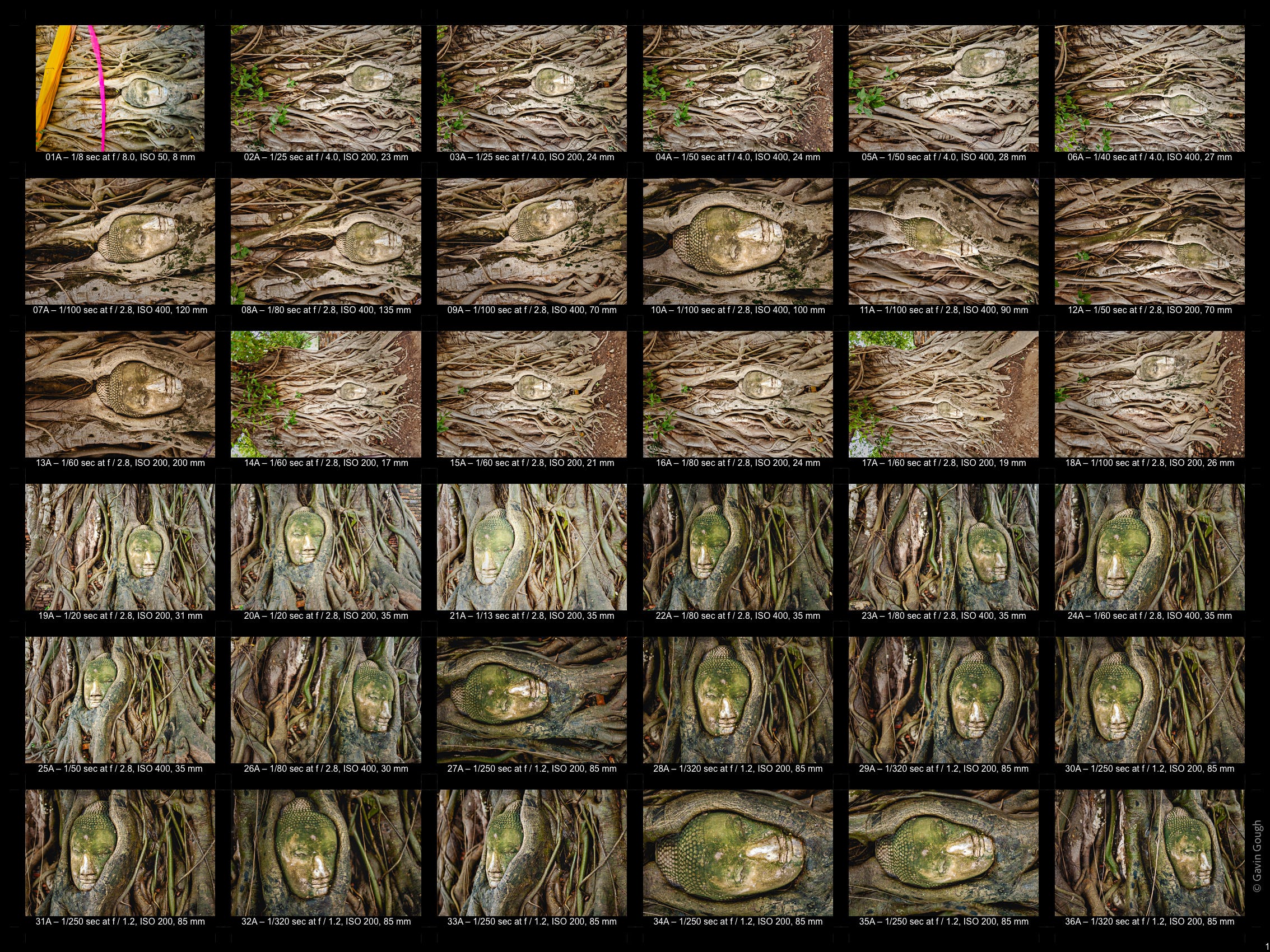
I spend a lot of time thinking about descriptive words for images. Writing captions and lists of keywords is a necessary skill for a commercial photographer. Ensuring keywords are accurate takes time and attention and I’ve built a large, carefully maintained keyword catalogue over many years. But ‘keywording’ has become a skill with a short half-life and diminishing returns.
Photographers weren’t asked to attach keywords to images before the arrival of online photo platforms, around the mid-1990s. Then keywords quickly became all-important, the only way for our images to reach the surface and be discovered by picture editors. These days, AI can examine a picture and write keywords pretty accurately. Yes, it can struggle to recognise specific events and to accurately identify people, but, for the most part, it’s able to pick out the important elements in a photo. No doubt it will continue to improve, and because it can apply keywords to thousands of images in a few seconds, its speed will make human keywording redundant. My keywording expertise will inevitably be added to the list of time-consuming, repetitive tasks outsourced to AI. At some point in the future, digital archaeologists might unearth my carefully constructed keyword catalogue and marvel that for a short period in time, humans would sit at keyboards, laboriously typing in lists of words to describe photos so that other humans could find them.
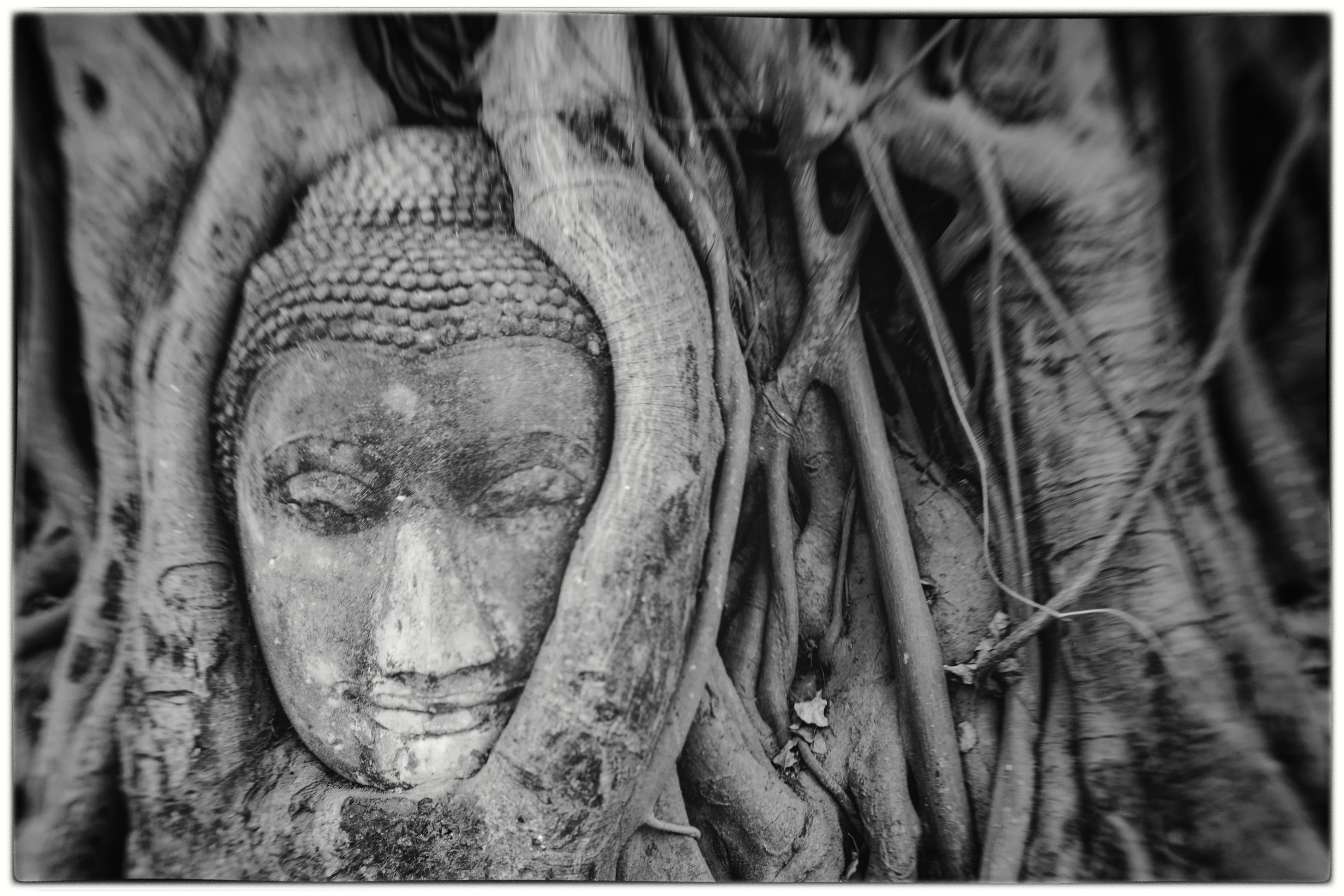
Keywords are retrospective, applied after the fact. There are two other occasions when I use language to frame my photographic work:
Lateral thinking prompts. Words and short phrases can be very useful for triggering alternative ways of thinking, expanding our approach to a project beyond the obvious. The Creative Inspiration cards that I post at the end of each newsletter are a good example. They’re not instructions, they’re interruptions. Reading and thinking about a Creative Inspiration phrase diverts our thinking away from well-trodden paths, leading our minds into unfamiliar territory. This is where we discover innovation; it’s where light bulb moments of inspiration reside.
Lens Words. Single words can serve as a way of focussing our attention in a particular direction. I think of lens words like a torch (flashlight) shining a beam of light. It illuminates parts of our creative landscape, narrowing our attention and relegating distractions to the shadows.
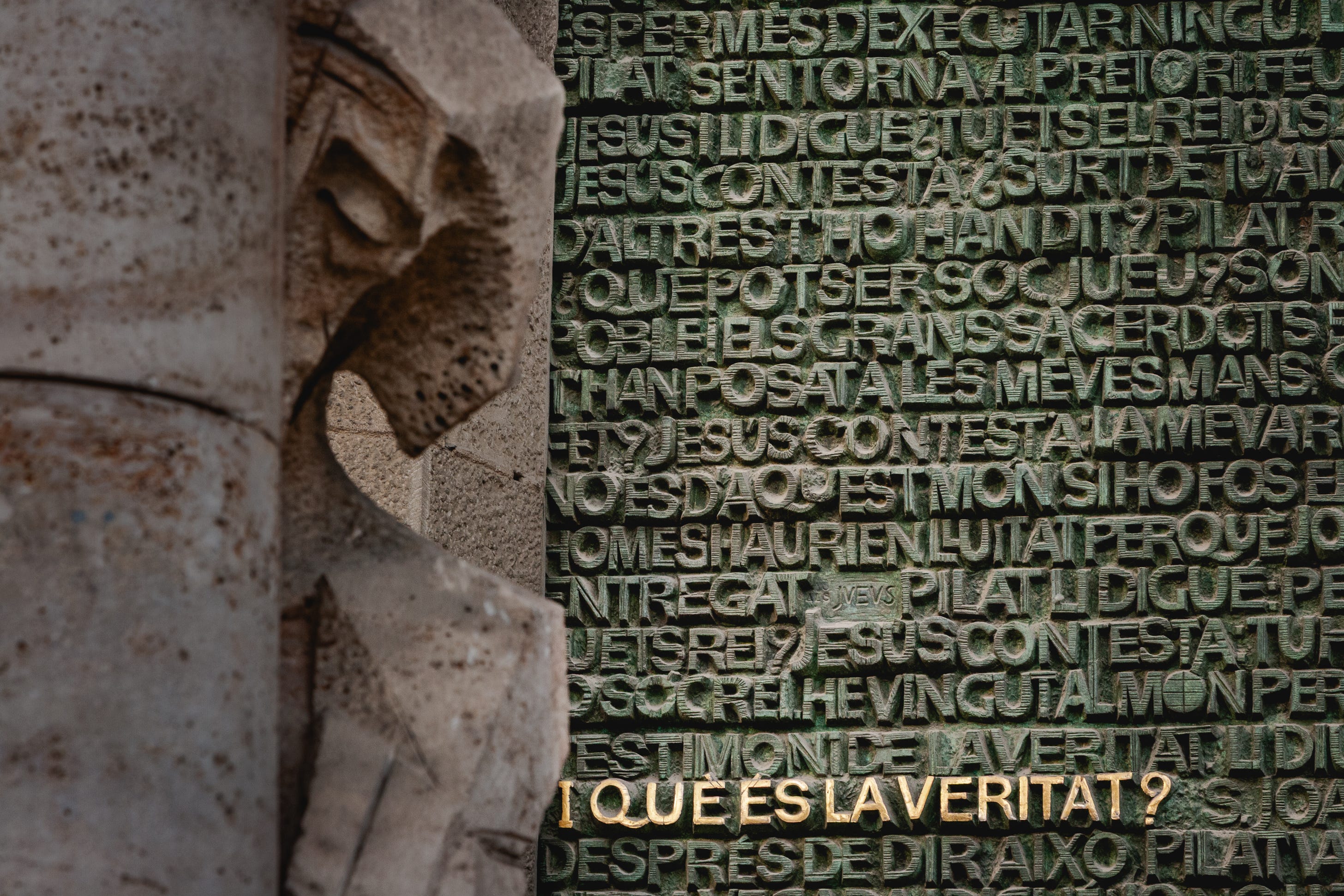
Lens words can be more than decorative framing, they can prompt a measurable cognitive shift in our perception. If you’d like an example, try using the word “Impress” to frame your approach to cooking dinner. With this word in mind, we’re more likely to reach for ambitious recipes, use expensive ingredients, and plate the meal with careful attention than if our framing word had been “Comfort” or “Speed”.
Our attention is constantly being influenced by things we barely notice. The weather, noise, conversations, emails, uncomfortable shoes, the time of day, hunger, lust, football, more emails, and a thousand other ever-changing environmental factors that might barely register on a conscious level. Using a lens word is simply an intentional primer that we purposefully add to the mix.
Here’s an example of how selective our attention can be. Watch the video and count the number of times the players in white shirts pass the ball.
There’s a whole area of scientific research into semantic priming and the way our minds can be encouraged in different directions based upon external triggers. When we understand how readily we can be influenced by external triggers, we can use that to our advantage. I promise that if you’re ever facing an awkward phone conversation, writing “Agreement” or “Understanding” on a prominent Post-It note before dialling will yield a more satisfactory outcome than the words “Persuade” or “Assertive” are likely to achieve.
Lens Words for Assignments
Lens words are especially useful when I’m compiling an assignment brief with a client. All of the ‘deliverables’ will be clearly listed, a Shot List will be agreed, but, arguably, the most important aspect is agreeing what message the images should communicate. A list of three or four definitive keywords narrows down the definition in an easy-to-remember way.
Almost invariably, when chatting with NGO clients, for example, words like “Dignity”, “Resilience” and “Respect” quickly surface – but these are so obvious that they’re clichés. These themes probably ought to be assumed for NGO work anyway.
It’s true that some NGOs might look for images that pull more at the heartstrings. Their keywords might be “Deprivation”, “Suffering”, “Rejection”, and you can imagine the sort of imagery words like this will produce. Fortunately, that approach is largely a thing of the past. Mostly by good fortune and sometimes by choice, I’ve never worked with an NGO that would seek to share that sort of hardship message.
The best lens words are less clichéd than “Dignity”, less obvious than “Respect”, and offer a more nuanced approach.
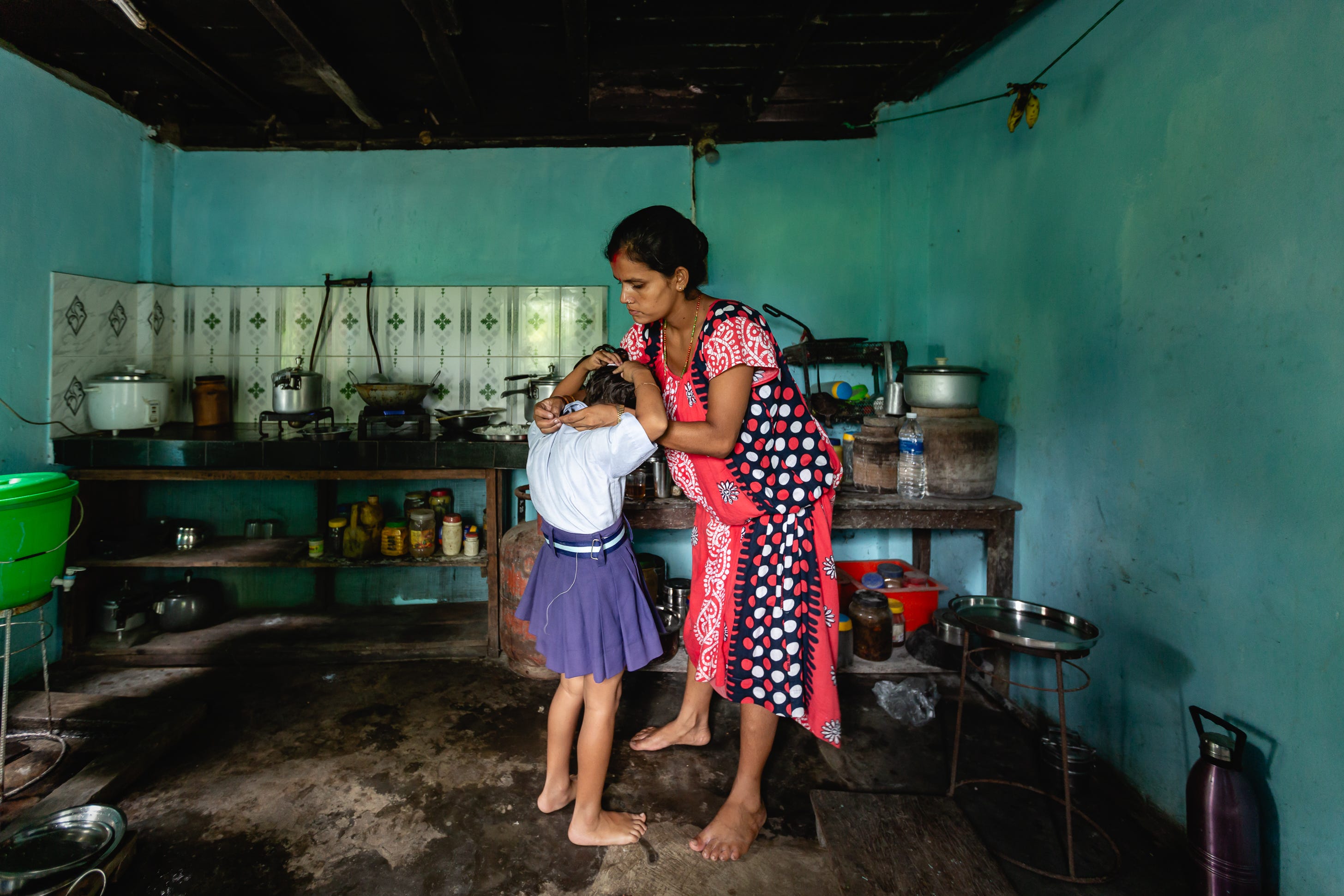
“Presence”, “Routine”, “Provision” and “Competence” were the words a client and I agreed upon for a development project in a rural part of Nepal.
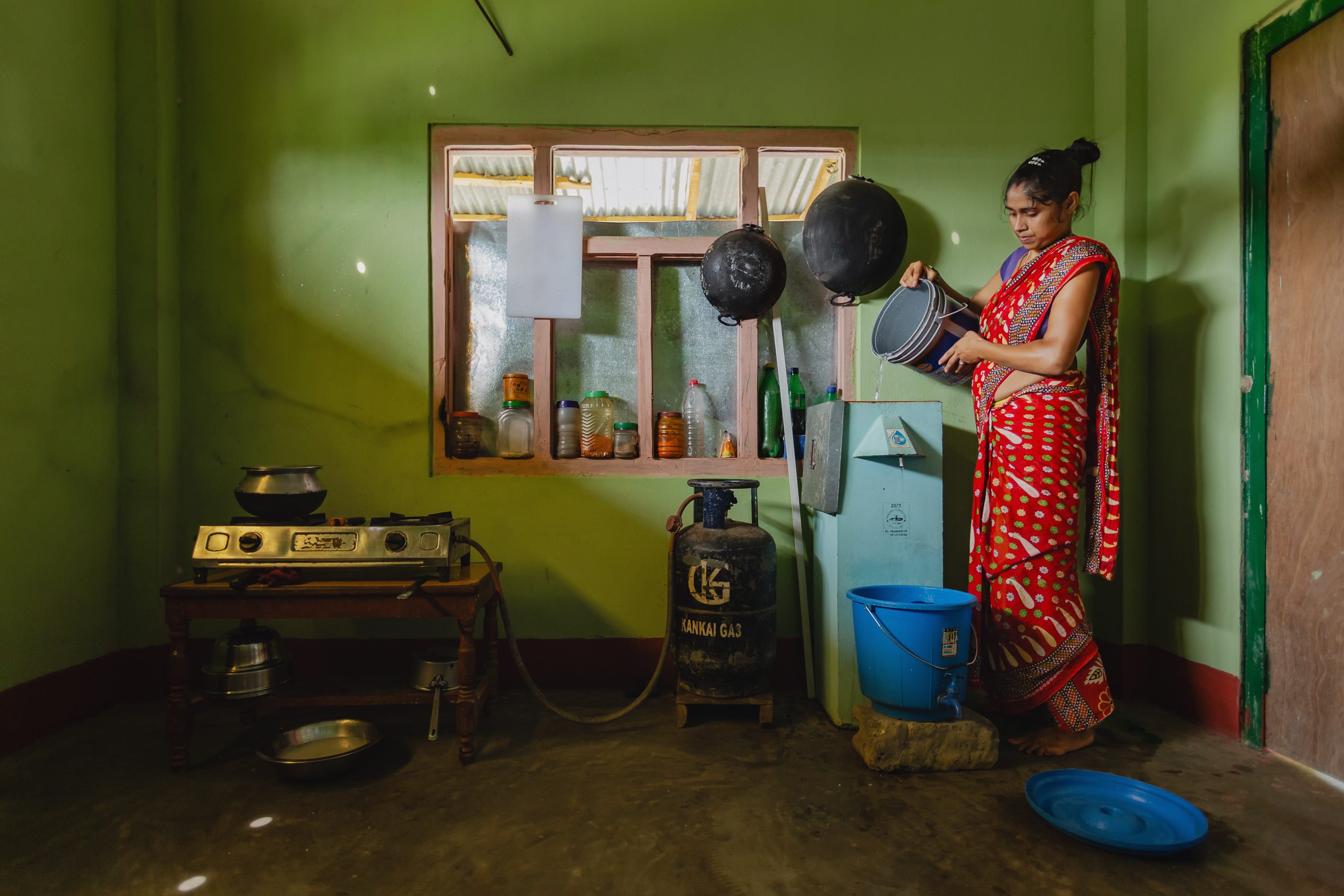
The resulting images show people going about their lives – often in glorious green kitchens – preparing for the day ahead, cooking, dressing their kids, the sort of everyday activities that we’re all familiar with, only in a different environment. The surroundings might be modest, but the scenes are, I hope, relatable. There’s no plea for pity – and dignity need not be bestowed by a magnanimous viewer, it is already present.
The use of lens words is such a simple yet effective tool that I use them all the time. Packing for a trip? “Reduce”. Designing a garden? “Sunlight”. Buying new shoes? “Robust”. Writing a newsletter? “Succinct”. OK, I know, they don’t always produce the desired result, but I believe the attempt is worthy of some acknowledgement.
Prix Pictet
One of my favourite examples of the lens word effect is demonstrated by the Prix Pictet photography prize.
Every other year, Prix Pictet introduces a single word theme related to the issue of sustainability. Photographic projects matching the theme are nominated and the photographer judged to have produced the most compelling project related to the theme is awarded 100,000 Swiss Francs.
Previous theme words include Human, Hope, Consumption, Growth, and Water. The announcement of the single word theme for 2026 was eagerly anticipated and I was in Arles last week when the new word was introduced with this video:
Jungle
I’ve been thinking about jungles a lot since the announcement. What exactly is a jungle?
I had assumed the word “jungle” had a precise scientific definition, much like a rain forest or a desert. But I’ve learned that “jungle” is more of a catch-all term for an uncultivated environment that’s dense and hard-to-penetrate.
The Prix Pictet introduction is probably a good place to start looking for clarification.
“The world’s jungles are the great green lungs of the planet. These huge carbon sinks play a crucial role in regulating and helping to stabilise the planet’s climate. Yet across the globe jungles are in crisis - forests are threatened by deforestation, fires, and degradation; surface water has been lost; and rivers are increasingly disconnected and polluted. The implications of any loss or degradation of these densely interconnected ecosystems extend well beyond changes in land use. Nothing in a jungle exists alone. They are complex interconnected systems that we only vaguely understand. The jungle is a place of mystery and secrets. It is a place of legendary lost cities and civilisations of economic adventures and many broken dreams. In this way, the jungle mirrors contemporary human environments more than we might expect. Cities, digital networks and social ecosystems have their own undergrowth: layers of complexity that obscure as much as they reveal.”
– Michael Benson, Director of Prix Pictet

As lens words are intended to do, thinking about the word “jungle” got me thinking of alternative meanings. There’s the obvious definition of a jungle as an impenetrable, tropical environment. As Michael Benson suggests, when thinking about sustainability, this definition is the obvious place to begin. He also hints at “urban jungles”, complex, man-made environments where sustainability is no less of an issue.
Until 2016, there was a refugee encampment on the outskirts of Calais in France that became known as “The Calais Jungle”. Although that site no longer exists, the notion of refugees living in metaphorical jungles and having to navigate the complexities of seeking asylum might provide a way of interpreting the theme.
I remembered an NPR article about a place in Ghana, which has become a dumping ground for huge amounts of discarded electronics (I’m pleased that I bookmark articles like this). The site is at Agbogbloshie in Accra, and perhaps all that wiring and miles of cables is a type of jungle – and it’s definitely a subject relevant to concerns about sustainability.

Also in Accra, the Kantamanto Market has become a vast landfill site for used clothing. CNN reports that 15 million garments arrive in Ghana every week. Much of it is unusable and is left as waste – a jungle of discarded fabric.

Perhaps there are less depressing jungle stories. Urban areas left intentionally undeveloped where nature has been allowed to reclaim the space, providing habitats for wildlife? Could “jungle” also be a synonym for the recovery of green spaces?
Different interpretations of “jungle” continue to reveal themselves. I wouldn’t have learned what happened to the Calais Jungle without the Prix Pictet prompt. I wouldn’t have been reminded about the electronics graveyard jungle in Accra or learned about the textile jungle at Kantamanto Market.
Lens words can sharpen our attention and I’d encourage you to try thinking about a single word when embarking on a project. It needn’t be photography. It might be something as everyday as your grocery shopping. I went to our local supermarket earlier today and, thinking of writing this edition, framed my shopping expedition with the word “Wholesome”. This is why I now have a pantry filled with organic carrots and a freezer devoid of chocolate ice cream – not a happy state of affairs. You have been warned, lens words can be powerful.
Storm
The winner of the previous iteration of the Prix Pictet, “Storm”, is Takashi Arai, a Japanese visual artist living in Berlin.
His project, Exposed in a Hundred Suns, is a challenge to visual perceptions of the nuclear histories of Japan, especially referencing his own imagined views of the 1945 nuclear attack on Hiroshima.

I was also very interested in Belal Khaled’s project, Hands Tell Stories, which he made whilst living in a tent in Nasser, Gaza, after his home was bombed.
Living beside Nasser Hospital, Belal began photographing the hands of patients, victims, fellow survivors, and those who were not so fortunate. I encourage you to look at Belal’s project and to read his Artist’s Statement (click the image for link).

“Art is my way of turning pain into hope, and a photograph is a window into silent stories that need to be told.”
– Belal Khaled

“The difference between the almost right word and the right word is really a large matter, ‘tis the difference between the lightning-bug and the lightning.”
– Mark Twain
The Wider Angle
Storm Exhibition
Shortlisted images from “Storm”, including Takashi Arai’s and Belal Khaled’s, are currently on display at the Museum of Contemporary Photography in Chicago until 22 August 2026.
Storm reveals not only disruption but also its generative force: the possibility of transformation, renewal, and hope that can emerge in its aftermath.
The World Cup in Gaza
The World Cup is over, the Spanish men’s football team were triumphant. Vamos España!
I have resisted the temptation to post some of the many memes showing Donald Trump standing as a stubbornly inappropriate presence in various gatherings (the Last Supper, deck of the Titanic, Moon landing, the cast of Friends) after he resisted invitations to leave the winners’ podium after the World Cup final.
Instead, more edifyingly, this collection of images showing football fans enjoying outdoor screenings of matches across the Gaza Strip illustrates what I’d suggest is more like the true spirit of football.
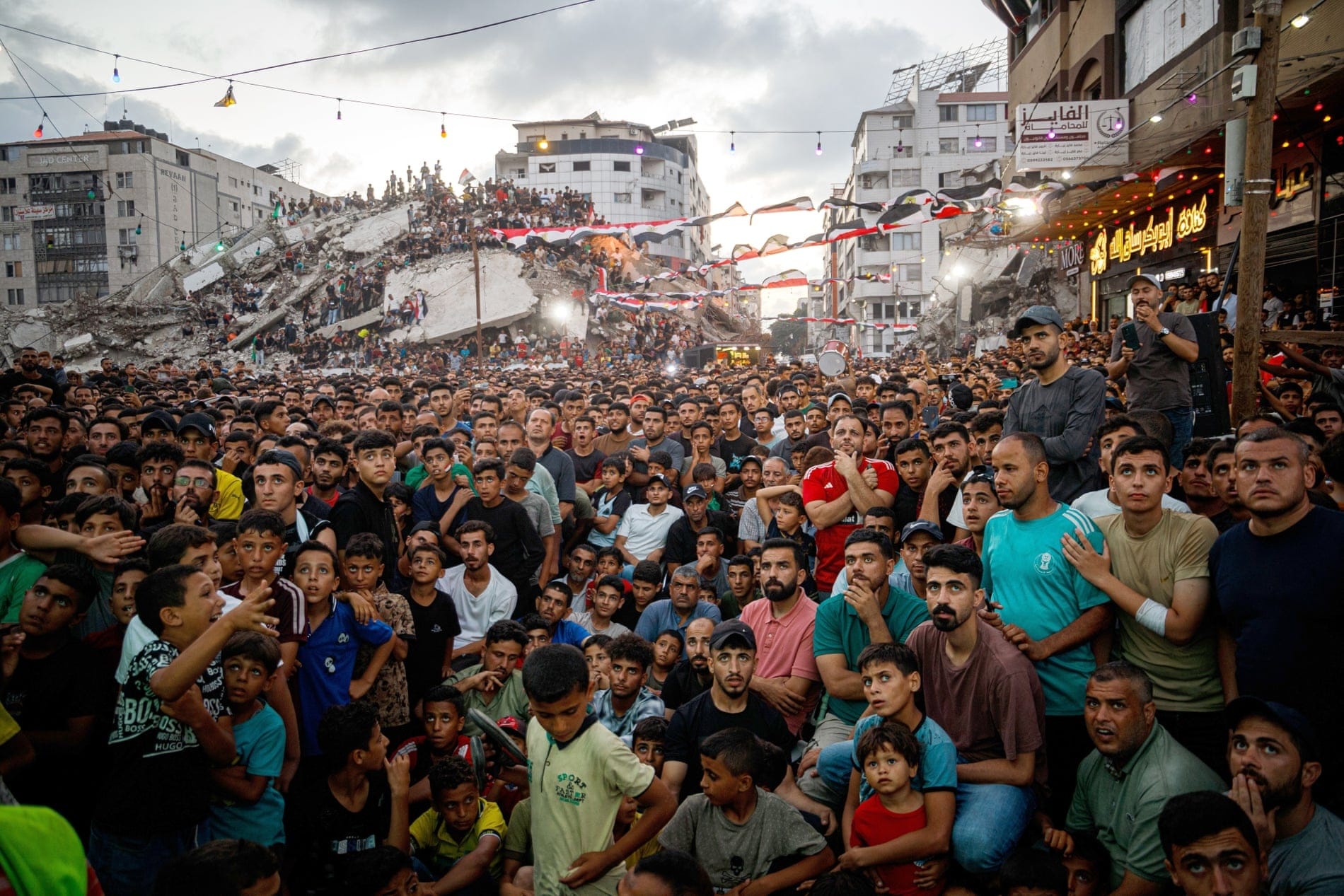
The screenings were organised by Mohamed al-Wahidi, PR Director for the Egyptian Committee in Gaza. He was on the way to join fans watching the Egypt v Argentina match when his taxi was struck by an Israeli missile, killing him and two young brothers standing on a nearby street.
CPW Photobook and Zine Fair
If you’re in the vicinity of Kingston in New York State in August, you might consider a detour to the 4th annual Photobook and Zine Fair.
Colleagues tell me that as well as a long list of publishers sharing their output, there will be panel discussions and artist talks.
The event takes place on the weekend of 8–9 August 2026.
And finally…
I went to the cinema to see The Odyssey on Tuesday. There were not many seats available in our local IMAX. Christopher Nolan deserves a special Oscar for encouraging so many people to go to the cinema.
Having grown up on a diet of Greek mythology and being a big fan of Christopher Nolan’s work, I had The Odyssey down as a potential cultural highlight of 2026.
In preparation, I’ve been listening to Stephen Fry reading his books about the Greek myths, and I managed to find several other film and TV versions of Homer’s epic. I enjoyed Ralph Fiennes as Odysseus and Juliette Binoche as Penelope in the 2024 film The Return. I even bought a copy of Margaret Atwood’s The Penelopiad.
In short, I was well-prepared for three marvellous hours watching Christopher Nolan and an impressive ensemble cast bringing The Odyssey to life.

Now please don’t tell anybody I said this because given the adoration the film is receiving, I fear I might be set upon by a tribe of man-eating Laestrygonians, but, well, I didn’t much like the film.
I wanted to like it. I was entirely predisposed to absolutely loving it. I fully expected it to become my favourite film ever. And I really wish those things were true but it just wasn’t that great. I’m sorry, Christopher Nolan.
The point at which I knew the film had lost me was, most disappointingly of all, when Odysseus reaches the cave of Polyphemus, the cyclops. The effects (no CGI) are incredible, it’s true, but it seemed as if the scenes had been edited out of sequence. It was so disjointed that I’m keen to see the film again to check that I haven’t watched a badly spliced copy.
Notwithstanding my less-than-impressed review, I still hope the film attracts an armful of Oscars and other awards because purely as a feat of filmmaking, it’s an extraordinary achievement. I might see if there are any seats available at the IMAX this weekend and go back to see it again. Perhaps my expectations were wildly unrealistic. I’m more inclined to accept the fault lies with me than with Christopher Nolan. But I shall have Interstellar cued up and ready to watch afterwards, just in case my first impressions are reinforced.
If you go to see The Odyssey, you’re very welcome – indeed, encouraged – to tell me that I’m mistaken. I’m sincerely hoping that I saw Elon Musk’s AI version of the Odyssey by mistake and that Christopher Nolan’s masterpiece still awaits.
We live in hope.
Go well.

✤ Creative Inspiration
Lateral-thinking prompts, inspired by Brian Eno’s Oblique Strategies, designed with photographers in mind.

Read more and learn how to use my Creative Strategies for Photographers.
